

Hey there! As a supplier of VPSA Oxygen Generators, I often get asked if these machines can be used in high - altitude areas. It's a valid question, and today, I'm gonna break it down for you.
First off, let's understand what a VPSA Oxygen Generator is. It stands for Vacuum Pressure Swing Adsorption Oxygen Generator. These generators work by using a process called pressure swing adsorption. In simple terms, they take in air from the surroundings, and through a series of steps, separate the oxygen from other gases like nitrogen. The oxygen is then delivered at a certain purity level for various applications, such as in hospitals, industrial processes, and even in some large - scale aquaculture. You can learn more about it here: VPSA Oxygen Generator.
Now, let's talk about high - altitude areas. High - altitude regions are characterized by lower atmospheric pressure and thinner air. The air at high altitudes has less oxygen per unit volume compared to sea - level areas. For example, at an altitude of 3,000 meters, the atmospheric pressure is significantly lower than at sea level, and the oxygen concentration in the air is also reduced.
So, can a VPSA Oxygen Generator work in such conditions? Well, the short answer is yes, but there are some factors to consider.
How VPSA Oxygen Generators Work in Normal Conditions
Under normal sea - level conditions, a VPSA Oxygen Generator takes in ambient air. The air is first compressed and then passed through a bed of adsorbent material, usually zeolite. Zeolite has a special property of selectively adsorbing nitrogen while allowing oxygen to pass through. As the air flows through the zeolite bed, nitrogen gets trapped, and the oxygen - rich gas is collected. After a certain period, the pressure is reduced, and the nitrogen is desorbed from the zeolite, allowing the bed to be reused for the next cycle.
Challenges in High - Altitude Areas
- Lower Air Density: At high altitudes, the lower air density means that there are fewer air molecules per unit volume. Since the VPSA Oxygen Generator takes in air to produce oxygen, it has to process a larger volume of air to get the same amount of oxygen as it would at sea level. This can put more strain on the compressor, which is responsible for taking in and compressing the air. The compressor may have to work harder and run at a higher capacity to ensure an adequate supply of air to the adsorption beds.
- Reduced Oxygen Partial Pressure: The partial pressure of oxygen in the air is also lower at high altitudes. The partial pressure is the pressure exerted by oxygen in the air mixture. A lower oxygen partial pressure can affect the efficiency of the adsorption process. The zeolite bed may not adsorb nitrogen as effectively because the driving force for the separation process is related to the partial pressure differences between oxygen and nitrogen. This can result in a lower purity of the generated oxygen.
- Temperature Variations: High - altitude areas often experience significant temperature variations, with colder temperatures being common. Cold temperatures can affect the performance of the compressor and other components of the VPSA Oxygen Generator. For example, the lubricants in the compressor may thicken at low temperatures, reducing the efficiency of the compressor and potentially causing damage over time.
Solutions and Adaptations
- Compressor Upgrades: To deal with the lower air density, the compressor in the VPSA Oxygen Generator can be upgraded. A more powerful compressor can take in a larger volume of air, compensating for the reduced air density at high altitudes. Some suppliers offer compressors with variable speed drives, which can adjust the compression rate based on the ambient conditions.
- Optimized Adsorption Beds: The design of the adsorption beds can be optimized for high - altitude use. For example, the zeolite can be selected or modified to work more effectively at lower oxygen partial pressures. The bed size and configuration can also be adjusted to improve the separation efficiency.
- Temperature Control: To combat the cold temperatures, the VPSA Oxygen Generator can be equipped with heating elements or insulation. Heating elements can be used to keep the compressor and other critical components at an optimal operating temperature. Insulation can help reduce heat loss and protect the equipment from extreme cold.
Advantages of Using VPSA Oxygen Generators in High - Altitude Areas
Despite the challenges, there are several advantages of using VPSA Oxygen Generators in high - altitude areas.
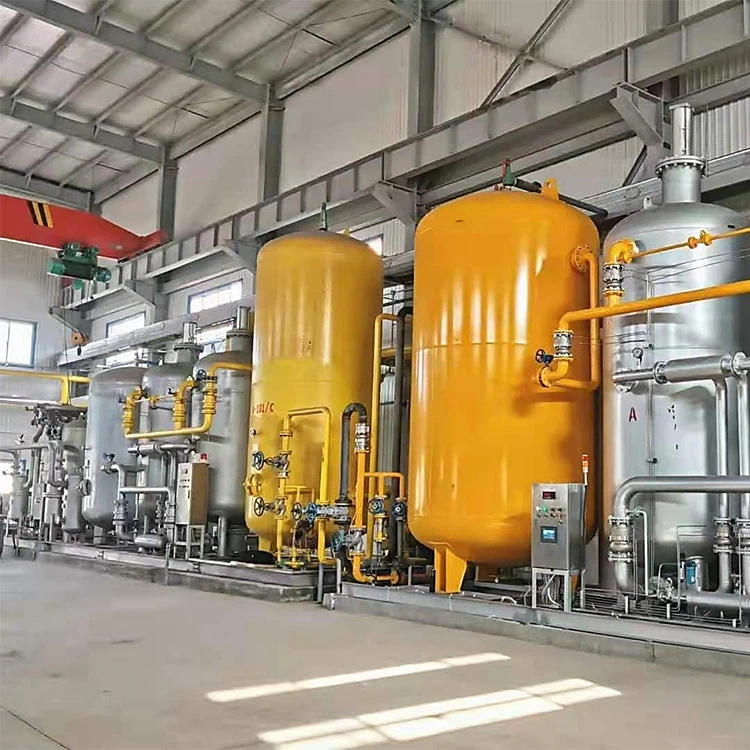

- On - Site Oxygen Production: High - altitude areas are often remote, and transporting oxygen cylinders can be difficult and expensive. A VPSA Oxygen Generator allows for on - site oxygen production, eliminating the need for frequent cylinder deliveries.
- Continuous Supply: Once installed and properly adjusted, a VPSA Oxygen Generator can provide a continuous supply of oxygen. This is crucial in applications such as hospitals, where a constant supply of oxygen is needed for patient care.
- Cost - Effective in the Long Run: Although the initial investment in a VPSA Oxygen Generator may be higher, in the long run, it can be more cost - effective than relying on oxygen cylinders. The cost of purchasing and transporting cylinders can add up over time, especially in high - altitude areas where logistics are more challenging.
Comparing with Other Oxygen Generation Technologies
There are other oxygen generation technologies available, such as PSA Nitrogen Generators. You can learn more about them here: PSA Nitrogen Generator. While PSA Nitrogen Generators are designed to produce nitrogen, they also use a similar pressure swing adsorption principle. However, for high - altitude areas where the main need is oxygen, a VPSA Oxygen Generator is a more suitable choice.
Real - World Applications in High - Altitude Areas
- Mining Operations: Many mines are located in high - altitude areas. Miners need a supply of oxygen for breathing, especially in underground mines where the air quality can be poor. A VPSA Oxygen Generator can be installed at the mine site to provide a continuous supply of oxygen for the miners.
- Remote Hospitals: High - altitude regions may have remote hospitals that need a reliable source of oxygen for patient care. A VPSA Oxygen Generator can ensure that these hospitals have access to oxygen, even in areas where it is difficult to transport oxygen cylinders.
Conclusion
In conclusion, a VPSA Oxygen Generator can be used in high - altitude areas, but it requires some adaptations to overcome the challenges posed by the lower air density, reduced oxygen partial pressure, and temperature variations. With the right upgrades and optimizations, these generators can provide a reliable and cost - effective source of oxygen in high - altitude environments.
If you're considering using a VPSA Oxygen Generator in a high - altitude area, we're here to help. We have a team of experts who can assess your specific needs and recommend the best solution for you. Whether it's compressor upgrades, optimized adsorption beds, or temperature control measures, we can customize the VPSA Oxygen Generator to work effectively in your high - altitude location. Don't hesitate to reach out if you have any questions or if you're interested in discussing a purchase. Let's work together to ensure you have a continuous and reliable supply of oxygen in your high - altitude project.
References
- Perry, R. H., & Green, D. W. (1997). Perry's Chemical Engineers' Handbook. McGraw - Hill.
- Yang, R. T. (1987). Gas Separation by Adsorption Processes. Butterworths.