

Hey there! As a supplier of VPSA Oxygen Generators, I often get asked about the role of the adsorbent in these machines. So, I thought I'd write this blog to break it down for you in plain English, no fancy jargon here.
First things first, let's talk about what a VPSA Oxygen Generator is. A VPSA (Vacuum Pressure Swing Adsorption) Oxygen Generator is a piece of equipment that separates oxygen from other gases in the air. It's a pretty nifty device that's used in a bunch of industries, like healthcare, metal fabrication, and water treatment. If you want to learn more about it, check out this VPSA Oxygen Generator link.
Now, onto the star of the show - the adsorbent. The adsorbent is like the secret sauce in a VPSA Oxygen Generator. It's a special material that has the amazing ability to attract and hold onto certain gases. In the case of a VPSA Oxygen Generator, the adsorbent is designed to preferentially adsorb nitrogen from the air, leaving behind a high concentration of oxygen.

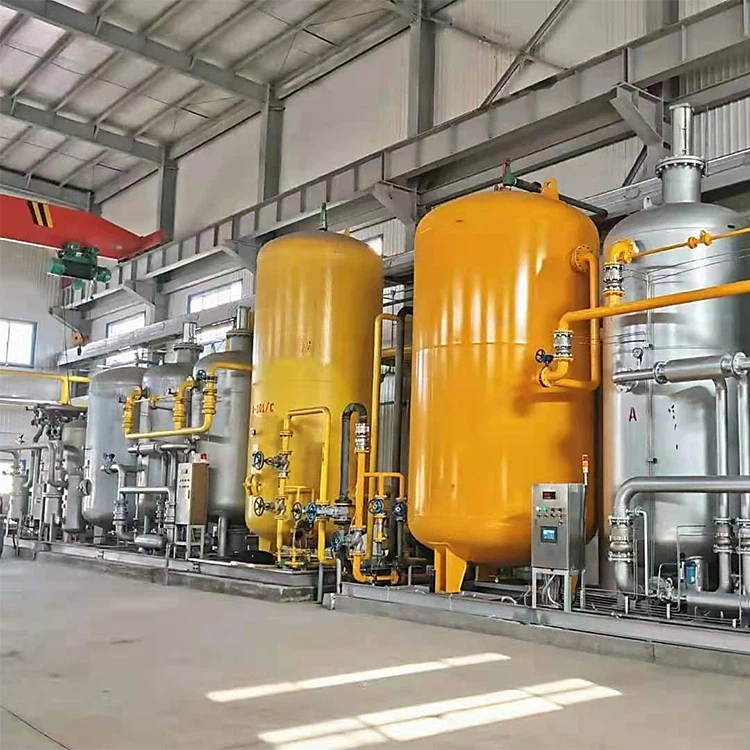
But how does it work? Well, it all comes down to the principle of adsorption. Adsorption is the process by which molecules of a gas or liquid adhere to the surface of a solid. In a VPSA Oxygen Generator, the adsorbent is packed into a column or vessel. When air is passed through this column under pressure, the nitrogen molecules in the air are attracted to the surface of the adsorbent and stick to it. The oxygen molecules, on the other hand, are not as strongly attracted to the adsorbent and pass through the column, resulting in a stream of oxygen-rich gas.
Once the adsorbent is saturated with nitrogen, the pressure in the column is reduced, and a vacuum is applied. This causes the nitrogen molecules to desorb from the surface of the adsorbent and be removed from the column. The adsorbent is then ready to adsorb more nitrogen, and the cycle repeats.
There are several types of adsorbents that can be used in a VPSA Oxygen Generator, but the most common one is zeolite. Zeolite is a type of porous mineral that has a high surface area and a unique crystal structure. This structure allows it to selectively adsorb nitrogen molecules based on their size and shape. Other types of adsorbents, such as activated carbon and silica gel, can also be used, but they are less commonly used in VPSA Oxygen Generators.
One of the key advantages of using an adsorbent in a VPSA Oxygen Generator is its ability to produce high-purity oxygen. By selectively adsorbing nitrogen, the adsorbent can remove a large portion of the impurities in the air, resulting in oxygen with a purity of up to 95%. This makes VPSA Oxygen Generators a popular choice for applications that require high-purity oxygen, such as medical oxygen production and industrial processes.
Another advantage of using an adsorbent is its energy efficiency. Unlike other methods of oxygen production, such as cryogenic distillation, VPSA Oxygen Generators do not require large amounts of energy to operate. The adsorption and desorption processes are relatively low-energy, which makes VPSA Oxygen Generators a cost-effective option for producing oxygen on-site.
In addition to producing high-purity oxygen and being energy-efficient, VPSA Oxygen Generators are also easy to operate and maintain. The adsorbent in a VPSA Oxygen Generator has a long lifespan and does not require frequent replacement. This means that once the generator is installed, it can operate continuously with minimal downtime and maintenance.
Now, let's talk about some of the factors that can affect the performance of the adsorbent in a VPSA Oxygen Generator. One of the most important factors is the quality of the adsorbent. The adsorbent should be of high quality and have a consistent pore structure and surface area. This ensures that it can effectively adsorb nitrogen and produce high-purity oxygen.
Another factor that can affect the performance of the adsorbent is the operating conditions of the VPSA Oxygen Generator. The temperature, pressure, and flow rate of the air passing through the generator can all have an impact on the adsorption and desorption processes. It's important to operate the generator within the recommended operating conditions to ensure optimal performance of the adsorbent.
Finally, the type of gas being separated can also affect the performance of the adsorbent. Different gases have different adsorption properties, and the adsorbent should be selected based on the specific gas separation requirements. For example, if the goal is to separate oxygen from nitrogen, a zeolite adsorbent would be a good choice. However, if the goal is to separate other gases, such as carbon dioxide or hydrogen, a different type of adsorbent may be required.
In conclusion, the adsorbent is a crucial component of a VPSA Oxygen Generator. It plays a key role in separating oxygen from nitrogen and producing high-purity oxygen. By understanding the function of the adsorbent and the factors that can affect its performance, you can ensure that your VPSA Oxygen Generator operates efficiently and effectively.
If you're in the market for a VPSA Oxygen Generator or have any questions about the adsorbent or the generator itself, don't hesitate to reach out. We're here to help you find the right solution for your oxygen production needs. And if you're also interested in nitrogen generation, check out our PSA Nitrogen Generator link.
References:
- "Pressure Swing Adsorption" by Douglas M. Ruthven, Sirirurg R. Farooq, and K. S. Knaebel
- "Adsorption Technology and Design" by D. M. Ruthven