

As a supplier of VPSA Oxygen Generators, I often encounter questions from customers regarding how these generators handle fluctuations in air flow. Understanding this aspect is crucial for ensuring the efficient and reliable operation of the oxygen generation system, especially in industrial settings where air flow can vary due to a multitude of factors.
The Basics of VPSA Oxygen Generation
Before delving into how VPSA Oxygen Generators handle air flow fluctuations, it's essential to understand the basic principles of VPSA technology. VPSA, or Vacuum Pressure Swing Adsorption, is a process used to separate oxygen from other components in the air, primarily nitrogen. The process relies on the selective adsorption of nitrogen onto a solid adsorbent material, such as zeolite, under pressure. When the pressure is reduced, the nitrogen is desorbed, and the adsorbent is regenerated for the next cycle.
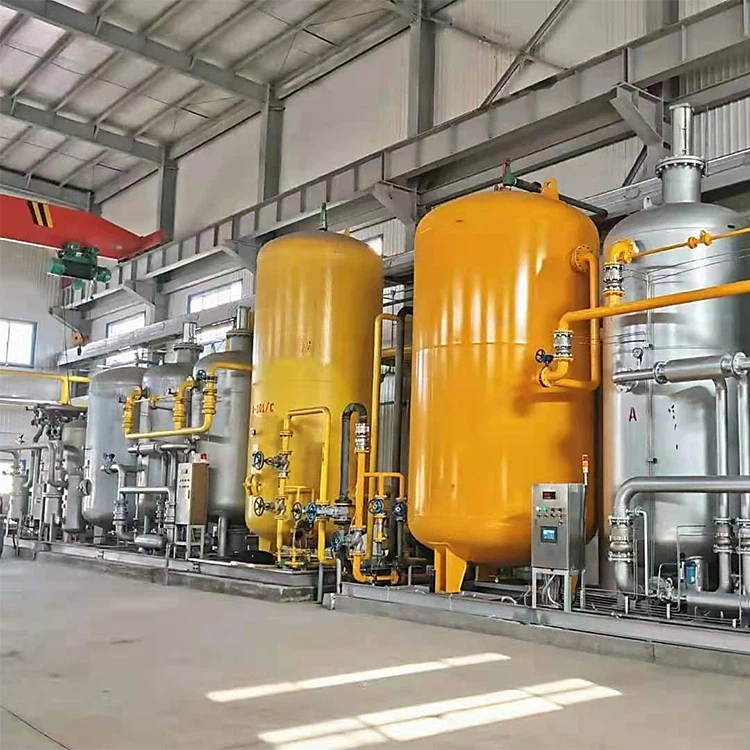

The VPSA Oxygen Generator consists of two or more adsorption vessels filled with the adsorbent material. Air is fed into one vessel under pressure, where nitrogen is adsorbed, allowing oxygen to pass through and be collected as the product gas. Meanwhile, the other vessel is being regenerated by reducing the pressure and purging the adsorbed nitrogen. This cyclic process ensures a continuous supply of oxygen.
Impact of Air Flow Fluctuations
Fluctuations in air flow can have several impacts on the performance of a VPSA Oxygen Generator. Firstly, a sudden increase in air flow can overload the adsorption vessels, reducing the contact time between the air and the adsorbent. This can lead to incomplete nitrogen adsorption, resulting in a lower purity of the produced oxygen. On the other hand, a significant decrease in air flow can cause the adsorbent to become underutilized, leading to inefficient operation and potentially higher energy consumption.
Moreover, air flow fluctuations can also affect the pressure balance within the system. Rapid changes in air flow can cause pressure spikes or drops, which may damage the equipment or disrupt the normal operation of the valves and controls. This can lead to increased maintenance requirements and downtime, which are costly for industrial users.
Strategies for Handling Air Flow Fluctuations
To address these challenges, VPSA Oxygen Generators are equipped with several features and control strategies to handle air flow fluctuations effectively.
Flow Control Valves
One of the primary methods for managing air flow fluctuations is the use of flow control valves. These valves are installed at the inlet of the adsorption vessels and can adjust the air flow rate based on the system's requirements. When the air flow increases, the valves can throttle the flow to maintain a stable pressure and ensure sufficient contact time between the air and the adsorbent. Conversely, when the air flow decreases, the valves can open wider to maintain the desired flow rate.
Pressure Sensors and Feedback Control
Pressure sensors are installed throughout the VPSA Oxygen Generator system to monitor the pressure at various points. These sensors provide real-time data to the control system, which can then adjust the operation of the flow control valves and other components accordingly. For example, if the pressure in the adsorption vessel exceeds a certain threshold due to an increase in air flow, the control system can signal the flow control valve to reduce the flow rate. This feedback control mechanism helps to maintain a stable pressure and ensure the efficient operation of the system.
Adsorbent Design and Capacity
The design and capacity of the adsorbent material also play a crucial role in handling air flow fluctuations. High-quality adsorbents with a large surface area and high adsorption capacity can better withstand variations in air flow. These adsorbents can adsorb more nitrogen in a shorter time, reducing the impact of increased air flow on oxygen purity. Additionally, the adsorbent can be designed to have a fast adsorption and desorption rate, allowing it to quickly adapt to changes in air flow.
System Redundancy and Backup
In some industrial applications, where air flow fluctuations can be severe and unpredictable, VPSA Oxygen Generators may be designed with system redundancy and backup. This involves installing multiple adsorption vessels or using parallel systems that can be activated or deactivated based on the air flow conditions. For example, if the air flow exceeds the capacity of a single adsorption vessel, an additional vessel can be brought online to handle the increased load. This ensures a continuous supply of oxygen even during periods of high air flow.
Real-World Examples
To illustrate the effectiveness of these strategies, let's consider a real-world example of a VPSA Oxygen Generator used in a steel manufacturing plant. In this application, the air flow can vary significantly depending on the production schedule and the operation of other equipment in the plant. The VPSA Oxygen Generator is equipped with flow control valves and pressure sensors, which continuously monitor and adjust the air flow to maintain a stable oxygen purity of 93%.
During periods of high production, when the air flow increases, the flow control valves throttle the flow to ensure sufficient contact time between the air and the adsorbent. The pressure sensors detect any changes in pressure and signal the control system to make further adjustments if necessary. As a result, the oxygen purity remains within the desired range, and the generator operates efficiently without any significant downtime.
Comparison with Other Oxygen Generation Technologies
It's also worth comparing the performance of VPSA Oxygen Generators in handling air flow fluctuations with other oxygen generation technologies, such as PSA Nitrogen Generators PSA Nitrogen Generator. While both PSA and VPSA technologies rely on adsorption processes, VPSA Oxygen Generators are generally better suited for handling air flow fluctuations due to their ability to operate at lower pressures and their use of vacuum regeneration.
PSA Nitrogen Generators typically operate at higher pressures and use pressure equalization steps to regenerate the adsorbent. These processes can be more sensitive to air flow fluctuations, as sudden changes in air flow can disrupt the pressure balance and affect the nitrogen separation efficiency. In contrast, VPSA Oxygen Generators can adjust the air flow more easily using flow control valves and can regenerate the adsorbent more effectively under vacuum conditions, making them more resilient to air flow variations.
Conclusion
In conclusion, VPSA Oxygen Generators are designed with a range of features and control strategies to handle air flow fluctuations effectively. By using flow control valves, pressure sensors, feedback control, and high-quality adsorbents, these generators can maintain a stable oxygen purity and efficient operation even in the face of varying air flow conditions. Additionally, system redundancy and backup options can provide further assurance of a continuous supply of oxygen in industrial applications.
If you are considering purchasing a VPSA Oxygen Generator VPSA Oxygen Generator for your industrial needs, it's important to choose a supplier with a proven track record in providing reliable and efficient oxygen generation solutions. Our company has extensive experience in the design, manufacture, and installation of VPSA Oxygen Generators, and we can help you select the right system for your specific requirements. Contact us today to discuss your oxygen generation needs and explore how our VPSA Oxygen Generators can benefit your operations.
References
- Ruthven, D. M., Farooq, S., & Knaebel, K. S. (1994). Pressure Swing Adsorption. John Wiley & Sons.
- Yang, R. T. (1987). Gas Separation by Adsorption Processes. Butterworth-Heinemann.
- Sircar, S., & Golden, T. C. (2005). PSA and VPSA Oxygen Plants: Principles, Performance, and Cycle Options. Separation Science and Technology, 40(1), 1-29.