

Hey there! As a supplier of VPSA Oxygen Generators, I often get asked about how these nifty machines work, especially when it comes to removing nitrogen from the air. So, today, I'm gonna break it down for you in a way that's easy to understand.
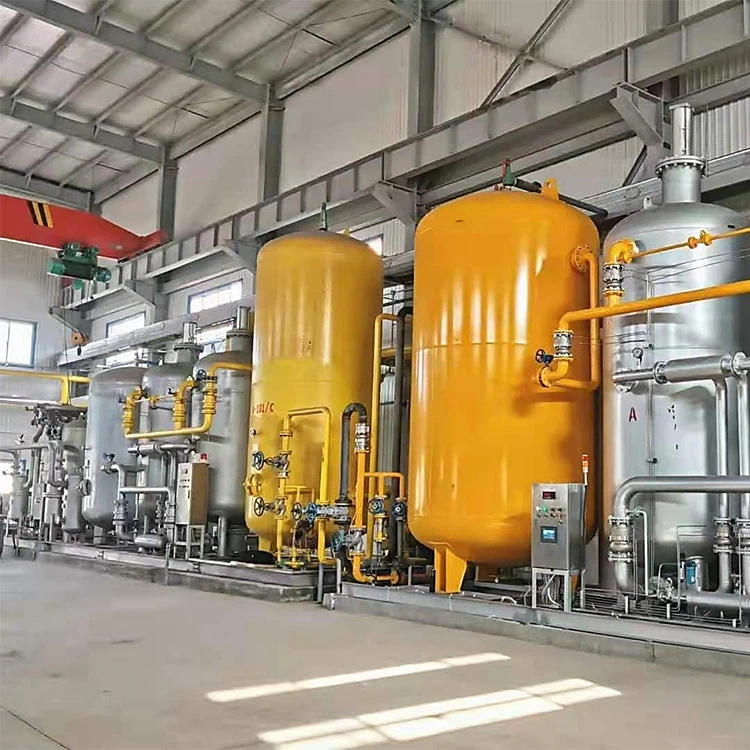
First off, let's talk a bit about what a VPSA Oxygen Generator is. A VPSA Oxygen Generator is a piece of equipment that uses the process of Vacuum Pressure Swing Adsorption to separate oxygen from the air. The air we breathe is mostly made up of nitrogen (about 78%) and oxygen (about 21%), with small amounts of other gases like argon, carbon dioxide, and neon. The goal of the VPSA Oxygen Generator is to increase the concentration of oxygen by removing the nitrogen.
The Basics of VPSA Technology
The VPSA process relies on a material called a molecular sieve. Molecular sieves are tiny, porous materials that have a unique property: they can selectively adsorb certain molecules based on their size and shape. In the case of a VPSA Oxygen Generator, the molecular sieve is designed to adsorb nitrogen molecules while allowing oxygen molecules to pass through.
The process works in a cycle that consists of two main phases: adsorption and desorption.
Adsorption Phase
During the adsorption phase, air is drawn into the VPSA Oxygen Generator under a certain pressure. The air passes through a bed of molecular sieve material. As the air flows through the sieve, the nitrogen molecules are attracted to the surface of the sieve and get trapped in its pores. This is because the nitrogen molecules are smaller and more polar than oxygen molecules, making them more likely to be adsorbed by the sieve.
Meanwhile, the oxygen molecules, which are not as strongly attracted to the sieve, pass through the bed and are collected as the product gas. The oxygen-rich gas can then be used for various applications, such as in medical facilities, industrial processes, or wastewater treatment.
Desorption Phase
Once the molecular sieve bed is saturated with nitrogen, it needs to be regenerated so that it can continue to adsorb nitrogen in the next cycle. This is where the desorption phase comes in.
During desorption, the pressure in the sieve bed is reduced, usually by applying a vacuum. The reduction in pressure causes the nitrogen molecules that were adsorbed onto the sieve to be released back into the atmosphere. This process is called desorption.
After the desorption phase, the sieve bed is ready to start a new adsorption cycle, and the process repeats itself.
How VPSA Compares to Other Nitrogen Removal Methods
There are other methods available for removing nitrogen from the air, such as cryogenic distillation and PSA (Pressure Swing Adsorption). Let's take a quick look at how VPSA compares to these methods.
Cryogenic Distillation
Cryogenic distillation is a process that involves cooling the air to extremely low temperatures (-196°C for nitrogen and -183°C for oxygen) until it liquefies. The liquid air is then separated into its components (nitrogen, oxygen, and other gases) based on their boiling points.
While cryogenic distillation can produce high-purity oxygen and nitrogen, it is a very energy-intensive and expensive process. It requires large, complex equipment and a significant amount of infrastructure to operate. In contrast, VPSA Oxygen Generators are more compact, energy-efficient, and cost-effective, making them a popular choice for many applications.
PSA (Pressure Swing Adsorption)
PSA is another method for separating gases based on adsorption. Like VPSA, PSA uses a molecular sieve to adsorb nitrogen from the air. However, the main difference between PSA and VPSA is the way the pressure is controlled during the adsorption and desorption phases.
In a PSA system, the adsorption phase is carried out at a higher pressure, and the desorption phase is carried out at a lower pressure (usually atmospheric pressure). In a VPSA system, the adsorption phase is carried out at a lower pressure, and the desorption phase is carried out under a vacuum.
The advantage of VPSA over PSA is that it can achieve a higher oxygen recovery rate and a lower energy consumption. This is because the use of a vacuum during the desorption phase allows for more efficient regeneration of the molecular sieve, resulting in a higher capacity for nitrogen adsorption.
Applications of VPSA Oxygen Generators
VPSA Oxygen Generators have a wide range of applications in various industries. Here are some examples:
Medical Industry
In the medical industry, VPSA Oxygen Generators are used to produce oxygen for patients who require respiratory support. The oxygen produced by these generators is of high purity and can be used in hospitals, clinics, and home care settings.
Industrial Applications
In the industrial sector, VPSA Oxygen Generators are used in processes such as metal cutting, welding, and smelting. The oxygen can also be used in chemical reactions, such as the production of ethylene oxide and methanol.

Wastewater Treatment
VPSA Oxygen Generators are also used in wastewater treatment plants to provide oxygen to the bacteria that break down organic matter in the water. This helps to improve the efficiency of the treatment process and reduce the amount of pollutants in the water.
Why Choose Our VPSA Oxygen Generators
As a supplier of VPSA Oxygen Generators, we take pride in offering high-quality products that are reliable, efficient, and cost-effective. Our generators are designed and manufactured using the latest technology and are built to meet the highest standards of quality and performance.
We also offer a range of customization options to meet the specific needs of our customers. Whether you need a small, portable generator for a medical clinic or a large, industrial-scale generator for a manufacturing plant, we can provide a solution that is tailored to your requirements.
In addition to our high-quality products, we also offer excellent customer service. Our team of experts is available to provide technical support, installation services, and maintenance and repair services to ensure that your VPSA Oxygen Generator operates smoothly and efficiently.
Conclusion
So, there you have it! That's how a VPSA Oxygen Generator removes nitrogen from the air. It's a fascinating process that uses the principles of adsorption and desorption to separate oxygen from nitrogen.
If you're in the market for a VPSA Oxygen Generator or have any questions about our products, don't hesitate to get in touch with us. We'd be happy to discuss your needs and provide you with a quote. Whether you're in the medical, industrial, or wastewater treatment industry, our VPSA Oxygen Generators can provide you with a reliable and cost-effective source of oxygen.
Let's start a conversation and see how we can help you with your oxygen generation needs.
References
- "Principles of Gas Separation by Adsorption" by Ralph T. Yang
- "Handbook of Pressure Swing Adsorption" by Douglas M. Ruthven, S. Farooq, and K. S. Knaebel