

Calculating the cost - effectiveness of a PSA Nitrogen Generator is crucial for businesses that rely on a continuous supply of high - purity nitrogen. As a PSA Nitrogen Generator supplier, I've seen firsthand how making an informed decision can lead to significant savings and improved operational efficiency. In this blog, I'll guide you through the key factors and steps to accurately assess the cost - effectiveness of a PSA Nitrogen Generator.
Understanding PSA Nitrogen Generators
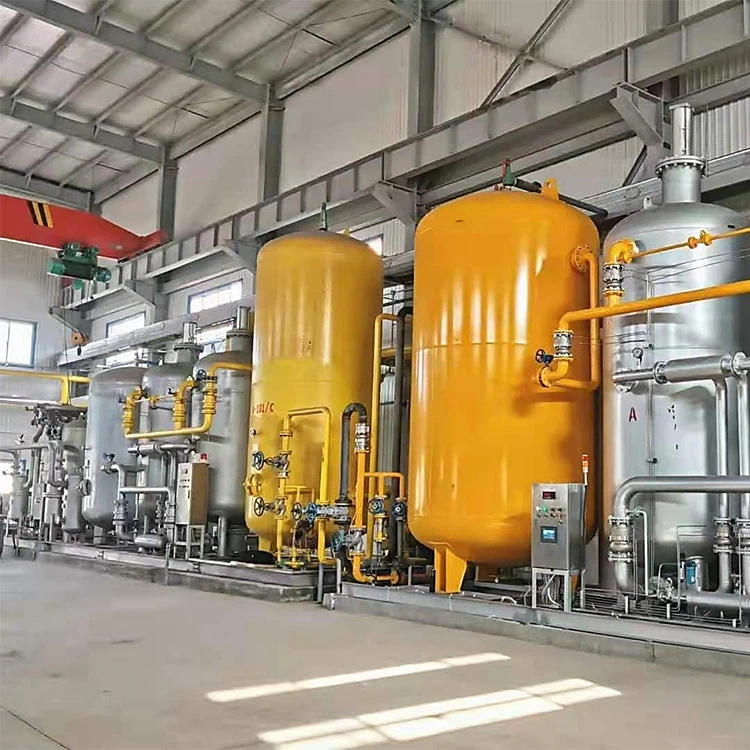
PSA, or Pressure Swing Adsorption, is a technology used to separate nitrogen from other gases in the air. A PSA Nitrogen Generator works by passing compressed air through a vessel filled with a special adsorbent material, usually zeolite. The adsorbent selectively adsorbs oxygen, carbon dioxide, and water vapor, allowing nitrogen to pass through and be collected as a product gas.
This process offers several advantages over traditional nitrogen supply methods such as liquid nitrogen tanks or nitrogen cylinders. PSA Nitrogen Generators provide an on - site, continuous supply of nitrogen, eliminating the need for frequent refills and the associated delivery costs. They also offer greater control over nitrogen purity and flow rate, which can be adjusted according to the specific requirements of the application. You can learn more about PSA Nitrogen Generators on our website: PSA Nitrogen Generator.
Factors Affecting the Cost - Effectiveness of a PSA Nitrogen Generator
Capital Costs
The initial purchase price of a PSA Nitrogen Generator is an important consideration. The cost can vary depending on the size, capacity, and features of the generator. Larger generators with higher nitrogen production rates and more advanced control systems generally cost more. However, it's important to look beyond the upfront cost and consider the long - term savings.
Operating Costs
- Energy Consumption: The energy required to run the compressor, which is an essential part of the PSA Nitrogen Generator system, is a major component of the operating costs. More energy - efficient compressors can significantly reduce electricity bills over time.
- Maintenance Costs: Regular maintenance is necessary to ensure the reliable operation of the PSA Nitrogen Generator. This includes replacing adsorbent materials, filters, and other components. The frequency and cost of maintenance depend on the quality of the equipment and the operating conditions.
- Consumables: In addition to adsorbent materials and filters, other consumables such as lubricants for the compressor may also contribute to the operating costs.
Nitrogen Purity and Flow Rate Requirements
The required nitrogen purity and flow rate have a direct impact on the cost - effectiveness of the PSA Nitrogen Generator. Higher purity levels generally require more complex and expensive equipment. Similarly, higher flow rates may require larger generators. It's important to accurately determine the nitrogen requirements of your application to avoid over - or under - sizing the generator.
Steps to Calculate the Cost - Effectiveness
Step 1: Determine Your Nitrogen Requirements
- Purity: Analyze your process to determine the minimum nitrogen purity required. For example, in some food packaging applications, a nitrogen purity of 99% may be sufficient, while in electronics manufacturing, a purity of 99.999% may be necessary.
- Flow Rate: Calculate the amount of nitrogen needed per hour or per day. This can be based on the volume of the equipment or process that uses nitrogen.
Step 2: Evaluate Different Generator Options
- Research Suppliers: Look for reputable PSA Nitrogen Generator suppliers. Compare the features, specifications, and prices of different models. Consider factors such as energy efficiency, maintenance requirements, and warranty.
- Request Quotes: Contact the suppliers and request detailed quotes that include the capital cost, operating costs, and any additional fees.
Step 3: Calculate the Total Cost of Ownership (TCO)
The TCO is a comprehensive measure of the cost - effectiveness of the PSA Nitrogen Generator over its entire lifespan. It includes the capital cost, operating costs, and any disposal or replacement costs at the end of the generator's useful life.
The formula for calculating the TCO is:
[TCO = Capital\ Cost+\sum_{i = 1}^{n}(Operating\ Costs_i)+Disposal\ or\ Replacement\ Cost]
where (n) is the number of years of the generator's useful life, and (Operating\ Costs_i) is the operating cost in year (i).
Step 4: Compare with Alternative Nitrogen Supply Methods
- Liquid Nitrogen Tanks: Liquid nitrogen is stored in tanks and delivered to the site. The cost of liquid nitrogen includes the purchase price, delivery fees, and the cost of maintaining the tanks. However, liquid nitrogen tanks require a large storage space and may have a limited supply capacity.
- Nitrogen Cylinders: Nitrogen cylinders are a convenient option for small - scale applications. But they are more expensive per unit volume of nitrogen and require frequent replacements.
By comparing the TCO of a PSA Nitrogen Generator with these alternative methods, you can determine which option is the most cost - effective for your business.
Case Study: Cost - Effectiveness of a PSA Nitrogen Generator in a Food Packaging Plant
Let's consider a food packaging plant that requires a continuous supply of nitrogen for packaging its products. The plant currently uses liquid nitrogen tanks.
- Current Situation: The plant spends approximately $50,000 per year on liquid nitrogen, including the purchase price and delivery fees. The tanks also require regular maintenance, which costs an additional $5,000 per year.
- PSA Nitrogen Generator Option: A PSA Nitrogen Generator with the appropriate capacity and purity can be purchased for $100,000. The estimated operating costs, including energy consumption and maintenance, are $20,000 per year.
Assuming a useful life of 10 years for the PSA Nitrogen Generator, the TCO of the PSA Nitrogen Generator is:
[TCO_{PSA}=100000 + 20000\times10=300000]
The TCO of using liquid nitrogen over 10 years is:
[TCO_{Liquid\ Nitrogen}=(50000 + 5000)\times10 = 550000]
In this case, the PSA Nitrogen Generator offers significant cost savings over the long term.

Additional Considerations
Environmental Impact
PSA Nitrogen Generators are generally more environmentally friendly than traditional nitrogen supply methods. They reduce the need for transportation of liquid nitrogen or nitrogen cylinders, which in turn reduces greenhouse gas emissions.
Flexibility and Reliability
PSA Nitrogen Generators provide greater flexibility in terms of adjusting the nitrogen purity and flow rate. They also offer a more reliable supply of nitrogen, as they are not subject to supply disruptions caused by delivery delays or shortages.
Conclusion
Calculating the cost - effectiveness of a PSA Nitrogen Generator is a complex but essential process for businesses. By considering the capital costs, operating costs, nitrogen requirements, and comparing with alternative supply methods, you can make an informed decision that will lead to significant savings and improved operational efficiency.
If you're interested in learning more about PSA Nitrogen Generators or need help calculating the cost - effectiveness for your specific application, please feel free to contact us. We're here to assist you in finding the most suitable PSA Nitrogen Generator for your business needs.
References
- Smith, J. (2020). "Advances in Pressure Swing Adsorption Technology for Gas Separation". Journal of Chemical Engineering.
- Brown, A. (2019). "Cost - Benefit Analysis of On - Site Gas Generation Systems". Industrial Gas Journal.