

In the realm of industrial gas generation, the Vacuum Pressure Swing Adsorption (VPSA) Oxygen Generator stands as a cornerstone technology, catering to a diverse range of sectors such as metallurgy, chemical processing, and wastewater treatment. At our company, we are a dedicated VPSA Oxygen Generator supplier, committed to delivering high - quality products and optimizing their performance. This blog aims to explore various strategies to enhance the oxygen production efficiency of a VPSA Oxygen Generator.
Understanding the Basics of VPSA Oxygen Generation
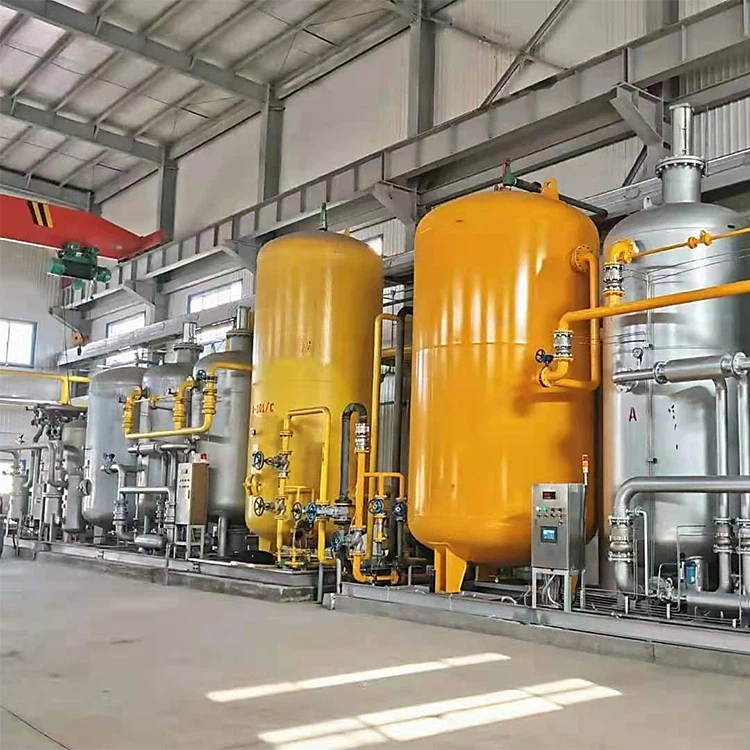
Before delving into the methods of improving efficiency, it is essential to understand the basic working principle of a VPSA Oxygen Generator. A VPSA system operates based on the principle of pressure swing adsorption, where adsorbent materials selectively adsorb nitrogen from the air at high pressure and release it at low pressure, thereby producing oxygen. The key components of a VPSA Oxygen Generator include adsorbers filled with molecular sieves, blowers, vacuum pumps, and control valves.
The efficiency of a VPSA Oxygen Generator is typically measured by parameters such as oxygen purity, oxygen production rate, and energy consumption. Higher oxygen purity and production rate with lower energy consumption indicate better efficiency.
Optimizing the Adsorbent Material
The adsorbent material is the heart of a VPSA Oxygen Generator. Molecular sieves, commonly used as adsorbents, have different adsorption capacities and selectivities for nitrogen. Choosing the right type of molecular sieve can significantly improve oxygen production efficiency.
Newer generations of molecular sieves offer better nitrogen adsorption performance, with higher adsorption capacity and faster adsorption kinetics. These advanced materials can adsorb more nitrogen in a shorter period, leading to a higher oxygen production rate. Additionally, they have better stability and longer service life, reducing the frequency of adsorbent replacement and maintenance costs.
Regular regeneration of the adsorbent is also crucial. Over time, the adsorbent may become saturated with moisture and other impurities, which can reduce its adsorption capacity. By implementing an effective regeneration process, such as heating or applying a vacuum, the adsorbent can be restored to its original state, ensuring continuous and efficient operation.
Upgrading the Equipment Design
The design of the VPSA Oxygen Generator equipment can have a profound impact on its efficiency. The size and shape of the adsorbers play a vital role. Properly sized adsorbers ensure that the air flows evenly through the adsorbent bed, maximizing the contact between the air and the adsorbent. This promotes more efficient nitrogen adsorption and oxygen separation.
The performance of the blowers and vacuum pumps is another critical factor. High - efficiency blowers can provide the necessary air flow rate at a lower power consumption, while advanced vacuum pumps can quickly and effectively reduce the pressure in the adsorbers during the desorption process. Upgrading to energy - efficient models can lead to significant savings in electricity costs over the long term.
In addition, the control system of the VPSA Oxygen Generator should be optimized. A sophisticated control system can precisely adjust the operating parameters such as pressure, flow rate, and cycle time according to the actual production requirements. This ensures that the generator operates at its optimal state under different working conditions, further improving efficiency.
Process Parameter Optimization
The operating parameters of a VPSA Oxygen Generator need to be carefully optimized to achieve maximum efficiency. The pressure swing cycle time is a crucial parameter. A shorter cycle time can increase the oxygen production rate, but it may also reduce the oxygen purity if the adsorption and desorption processes are not completed effectively. Conversely, a longer cycle time may improve purity but decrease the production rate. Finding the optimal cycle time is a balance that depends on the specific application requirements and the characteristics of the adsorbent and equipment.
The feed air flow rate also affects the efficiency. An appropriate feed air flow rate ensures that the adsorbent is fully utilized without overloading the system. If the flow rate is too high, the nitrogen may not be completely adsorbed, resulting in lower oxygen purity. On the other hand, if the flow rate is too low, the production rate will be reduced.
The temperature of the feed air can influence the adsorption performance of the molecular sieve. Generally, lower temperatures are more favorable for nitrogen adsorption. Therefore, in some cases, pre - cooling the feed air can improve the efficiency of the VPSA Oxygen Generator.
Maintenance and Monitoring
Regular maintenance is essential for the long - term efficient operation of a VPSA Oxygen Generator. This includes checking and replacing worn - out parts such as valves, filters, and seals. A well - maintained system can prevent leaks and malfunctions, ensuring stable and efficient oxygen production.
Continuous monitoring of the key operating parameters is also crucial. By installing sensors and monitoring systems, real - time data on oxygen purity, production rate, pressure, and temperature can be collected. Analyzing this data can help identify potential issues before they cause major problems and allow for timely adjustments to the operating parameters to maintain optimal efficiency.
Comparison with Other Gas Generation Technologies
It is also worth comparing the VPSA Oxygen Generator with other gas generation technologies, such as the PSA Nitrogen Generator. While the PSA Nitrogen Generator focuses on producing nitrogen through pressure swing adsorption, the VPSA Oxygen Generator is specialized in oxygen production. Each technology has its own advantages and suitable applications.
The VPSA Oxygen Generator offers several unique advantages. It can produce oxygen with a relatively high purity at a lower cost compared to cryogenic oxygen generation methods. It is also more flexible and can be easily adjusted to meet different production requirements. However, like any technology, it also has its limitations, such as the need for regular adsorbent replacement and the sensitivity to operating conditions.
Conclusion
In conclusion, improving the oxygen production efficiency of a VPSA Oxygen Generator is a multi - faceted task that involves optimizing the adsorbent material, upgrading the equipment design, fine - tuning the process parameters, and ensuring proper maintenance and monitoring. As a VPSA Oxygen Generator supplier, we are constantly researching and developing new technologies and solutions to enhance the performance of our products.

If you are interested in our VPSA Oxygen Generators or have any questions about improving oxygen production efficiency, please feel free to contact us for more information and procurement discussions. We are committed to providing you with the best solutions tailored to your specific needs.
References
- Ruthven, D. M., Farooq, S., & Knaebel, K. S. (1994). Pressure swing adsorption. Wiley.
- Yang, R. T. (1987).Gas separation by adsorption processes. Butterworth Publishers.