

Hey there! As a supplier of PSA Nitrogen Generators, I'm super excited to share with you the main components of these amazing machines. PSA, which stands for Pressure Swing Adsorption, is a technology used to separate nitrogen from other gases in the air. It's a pretty cool process, and understanding the key components can help you see why PSA Nitrogen Generators are such a popular choice for various industries.
Air Compressor
Let's start with the air compressor. This is like the heart of the PSA Nitrogen Generator system. Its job is to take in ambient air and compress it to a high pressure. Think of it as a big pump that forces air into the system. Without a good air compressor, the whole process wouldn't work. The compressed air is then sent to the next stage of the system.
There are different types of air compressors you can use in a PSA Nitrogen Generator. Reciprocating compressors are one option. They use pistons to compress the air. These are often used in smaller systems because they're relatively simple and cost - effective. On the other hand, screw compressors are great for larger applications. They can handle a higher volume of air and are more efficient in the long run.
Air Treatment Unit
Once the air is compressed, it's far from being pure enough to be used in the nitrogen separation process. That's where the air treatment unit comes in. This unit has a few important jobs. First, it removes moisture from the compressed air. Moisture can cause all sorts of problems in the PSA system, like reducing the efficiency of the adsorbent material.
The air treatment unit also filters out dust and other particles. You don't want any of these contaminants getting into the adsorbers, as they can damage the adsorbent and mess up the nitrogen separation process. Usually, this unit consists of a pre - filter, an activated carbon filter, and a dryer. The pre - filter catches the larger particles, the activated carbon filter removes oil and other organic contaminants, and the dryer gets rid of the moisture.
Adsorbers
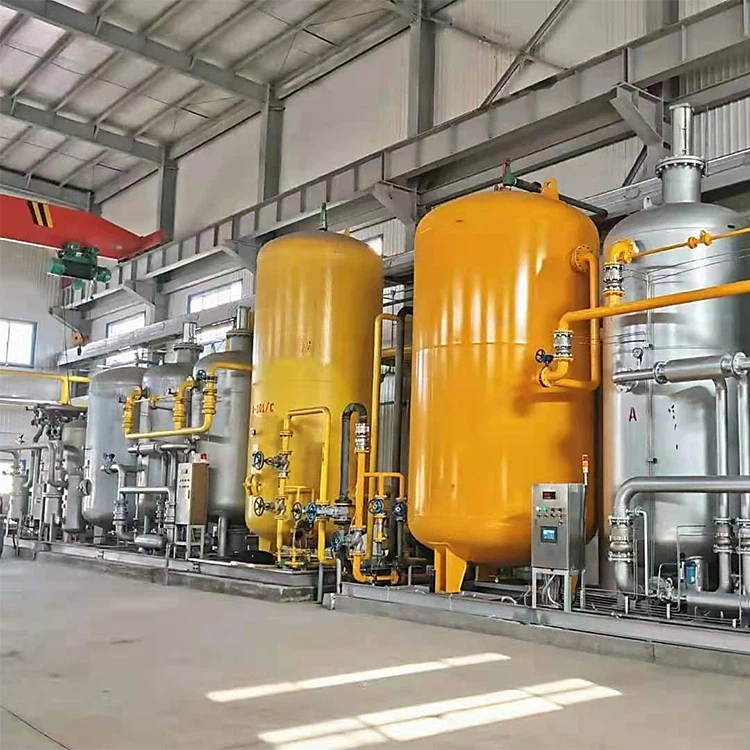
Now, the adsorbers are where the magic happens. These are the vessels that contain the adsorbent material, usually zeolite molecular sieves. Zeolite has a unique property where it can selectively adsorb oxygen and other trace gases from the compressed air, while allowing nitrogen to pass through.
Most PSA Nitrogen Generators have two adsorbers. While one adsorber is in the adsorption phase, separating nitrogen from the air, the other is in the regeneration phase. During the regeneration phase, the pressure in the adsorber is reduced, and the adsorbed oxygen and other gases are released. This allows the adsorbent to be ready for the next adsorption cycle.
The size and number of adsorbers can vary depending on the nitrogen production capacity of the generator. For small - scale applications, you might have smaller adsorbers, while large industrial plants require bigger and more adsorbers to meet their high nitrogen demand.

Control System
The control system is like the brain of the PSA Nitrogen Generator. It monitors and controls all the processes in the system. It regulates the pressure in the adsorbers, controls the flow of air and nitrogen, and ensures that the whole system is running smoothly.
Modern control systems are usually automated and can be programmed to meet specific requirements. For example, you can set the desired nitrogen purity level, and the control system will adjust the operation of the generator accordingly. It also has safety features that can shut down the system in case of any malfunctions or abnormal conditions.
Nitrogen Buffer Tank
After the nitrogen is separated in the adsorbers, it goes into the nitrogen buffer tank. This tank acts as a storage unit for the produced nitrogen. It helps to stabilize the nitrogen flow and pressure. You see, the nitrogen production process in the adsorbers is a bit intermittent because of the adsorption and regeneration cycles. The buffer tank smooths out these fluctuations, so you get a steady supply of nitrogen at a consistent pressure.
The size of the nitrogen buffer tank depends on the application. If you have a continuous and high - demand process, you'll need a larger buffer tank to ensure that there's always enough nitrogen available.
Quality Monitoring System
To make sure that the nitrogen produced meets the required quality standards, a quality monitoring system is installed. This system measures the purity of the nitrogen. There are different methods to measure nitrogen purity, but the most common one is using a thermal conductivity analyzer.
The quality monitoring system constantly checks the nitrogen purity and sends signals to the control system. If the purity level drops below the set value, the control system can take corrective actions, such as adjusting the operation of the adsorbers or increasing the air flow rate.
PSA Nitrogen Generator in Different Industries
PSA Nitrogen Generators are used in a wide range of industries. In the food and beverage industry, nitrogen is used for packaging to prevent oxidation and extend the shelf life of products. In the electronics industry, it's used for soldering and circuit board manufacturing to create an inert atmosphere and prevent oxidation of components.
In the chemical industry, nitrogen is used as a blanketing gas to prevent explosive mixtures from forming. And in the oil and gas industry, it's used for well stimulation and pipeline purging.
If you're in any of these industries or other industries that require a reliable supply of nitrogen, a PSA Nitrogen Generator could be the perfect solution for you. You can learn more about PSA Nitrogen Generator on our website. And if you're also interested in oxygen generation, we also offer VPSA Oxygen Generator.
Why Choose Our PSA Nitrogen Generators
As a supplier, we take pride in offering high - quality PSA Nitrogen Generators. Our generators are designed with the latest technology to ensure high efficiency and reliability. We use top - grade materials in the construction of all components, so you can expect a long - lasting and low - maintenance system.
Our team of experts can also provide customized solutions based on your specific requirements. Whether you need a small - scale generator for a laboratory or a large - scale industrial system, we've got you covered.
Contact Us for Purchase and Negotiation
If you're interested in purchasing a PSA Nitrogen Generator or want to discuss your nitrogen generation needs, don't hesitate to get in touch with us. We're always happy to answer your questions, provide detailed product information, and work with you to find the best solution for your business.
References
- Perry, R. H., & Green, D. W. (1997). Perry's Chemical Engineers' Handbook. McGraw - Hill.
- Kohl, A. L., & Nielsen, R. B. (1997). Gas Purification. Gulf Publishing Company.