

Hey there! As a supplier of PSA Nitrogen Generators, I often get asked about the air quality requirements for these nifty machines. So, I thought I'd take a few minutes to break it down for you.
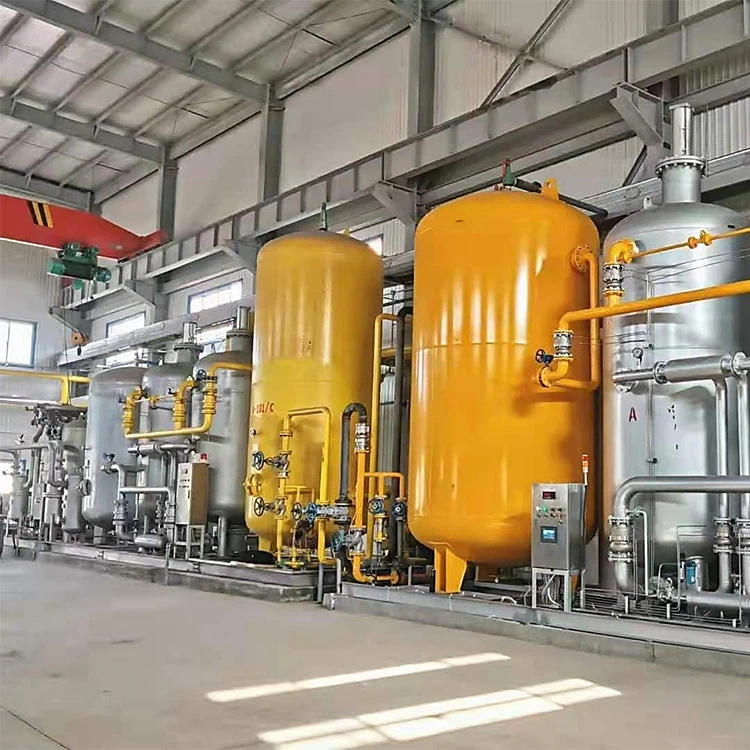
First off, let's talk a bit about what a PSA Nitrogen Generator is. A PSA Nitrogen Generator, or PSA Nitrogen Generator for short, uses a process called Pressure Swing Adsorption to separate nitrogen from other gases in the air. It's a pretty cool technology that allows you to generate your own nitrogen on - site, which can save you a ton of money and hassle compared to buying nitrogen cylinders.
Now, when it comes to the air quality requirements for a PSA Nitrogen Generator, there are a few key factors we need to consider.
1. Particulate Matter
Particulate matter in the air can be a real problem for PSA Nitrogen Generators. Tiny dust particles, dirt, and other debris can clog up the adsorbent beds in the generator. These adsorbent beds are where the magic happens - they selectively adsorb oxygen and other gases, leaving behind nitrogen. If they get clogged, the efficiency of the generator drops significantly.
Ideally, the air going into the PSA Nitrogen Generator should have a very low level of particulate matter. A good rule of thumb is to have an air filtration system that can remove particles as small as 0.1 to 1 micron. This helps to ensure that the adsorbent beds stay clean and the generator can operate at peak performance.

2. Oil and Water Vapor
Oil and water vapor in the air are also big no - no's for PSA Nitrogen Generators. Oil can coat the adsorbent material, reducing its ability to adsorb gases effectively. Water vapor can cause corrosion inside the generator and also interfere with the adsorption process.
To deal with oil and water vapor, most PSA Nitrogen Generators are equipped with pre - filters and dryers. These components remove the majority of the oil and water vapor from the incoming air. However, it's important to make sure that the air source has a relatively low initial level of these contaminants. For example, the oil content in the air should be less than 0.01 ppm (parts per million), and the dew point of the air should be around - 40°C or lower.
3. Chemical Contaminants
There are various chemical contaminants in the air that can be harmful to PSA Nitrogen Generators. Things like sulfur compounds, ammonia, and volatile organic compounds (VOCs) can react with the adsorbent material or cause other problems in the generator.
If the air source is in an industrial area or near a source of chemical emissions, it's crucial to test the air for these contaminants. In some cases, additional filtration or purification steps may be required to remove these chemicals before the air enters the generator.
4. Temperature and Pressure
The temperature and pressure of the incoming air also play a role in the performance of a PSA Nitrogen Generator. Generally, these generators work best when the air temperature is between 5°C and 40°C. If the air is too hot, the adsorbent material may not work as effectively.
As for pressure, the air should be supplied at a relatively stable pressure. Most PSA Nitrogen Generators require an inlet air pressure of around 7 - 10 bar. Fluctuations in pressure can disrupt the adsorption process and lead to inconsistent nitrogen production.
Why Air Quality Matters
You might be wondering why all these air quality requirements are so important. Well, if the air quality is poor, it can lead to a number of issues. The generator may produce nitrogen with a lower purity level, which can be a big problem if you need high - purity nitrogen for your applications. It can also reduce the lifespan of the generator, as the adsorbent beds and other components will wear out faster. And let's not forget about the increased maintenance costs. If the generator is constantly having problems due to poor air quality, you'll end up spending more time and money on repairs and replacements.
Comparing with VPSA Oxygen Generator
It's also interesting to compare the air quality requirements of a PSA Nitrogen Generator with those of a VPSA Oxygen Generator. While both use pressure swing adsorption technology, their requirements are a bit different. A VPSA Oxygen Generator is more focused on separating oxygen from the air. It also has to deal with particulate matter, oil, water vapor, and chemical contaminants, but the specific limits and sensitivities may vary. For example, the adsorbent material in a VPSA Oxygen Generator may be more sensitive to certain chemicals that don't affect a PSA Nitrogen Generator as much.
Ensuring Good Air Quality
So, how can you ensure that the air going into your PSA Nitrogen Generator meets the required quality standards? Here are a few tips:
- Choose the Right Location: Place the generator in an area where the air is relatively clean. Avoid areas near construction sites, industrial chimneys, or busy roads.
- Install Proper Filtration and Purification Systems: Make sure your generator is equipped with high - quality pre - filters, dryers, and other purification components. Regularly replace these filters according to the manufacturer's recommendations.
- Monitor the Air Quality: Use air quality monitoring equipment to keep an eye on the particulate matter, oil, water vapor, and chemical contaminants in the air. This will help you detect any issues early and take corrective action.
Conclusion
In conclusion, the air quality requirements for a PSA Nitrogen Generator are quite specific and important. By ensuring that the incoming air meets these requirements, you can ensure that your generator operates efficiently, produces high - purity nitrogen, and has a long lifespan.
If you're in the market for a PSA Nitrogen Generator or have any questions about air quality requirements, feel free to reach out. We're here to help you make the best choice for your nitrogen generation needs. Whether you're in a small laboratory or a large industrial facility, we've got the right solution for you. Let's start a conversation and see how we can work together to meet your nitrogen requirements.
References
- Perry, R. H., & Green, D. W. (Eds.). (2008). Perry's Chemical Engineers' Handbook. McGraw - Hill.
- Kohl, A. L., & Nielsen, R. B. (1997). Gas Purification. Gulf Publishing Company.