

Hey there! As a supplier of PSA Nitrogen Generators, I often get asked about the various components and their functions in these machines. One crucial part that plays a significant role is the control system. So, let's dive into what the function of the control system in a PSA Nitrogen Generator is.
First off, let's briefly touch on what a PSA Nitrogen Generator is. PSA stands for Pressure Swing Adsorption. It's a technology used to separate nitrogen from other gases in the air. These generators are widely used in industries like food packaging, electronics manufacturing, and chemical processing, just to name a few. You can learn more about PSA Nitrogen Generator on our website.
Now, back to the control system. The control system in a PSA Nitrogen Generator is like the brain of the whole operation. It's responsible for making sure that everything runs smoothly and efficiently.
One of the primary functions of the control system is to manage the pressure swing process. In a PSA Nitrogen Generator, there are two adsorption towers filled with a special adsorbent material, usually carbon molecular sieve (CMS). The adsorbent has the property of selectively adsorbing oxygen and other impurities from the air under high pressure, while allowing nitrogen to pass through.
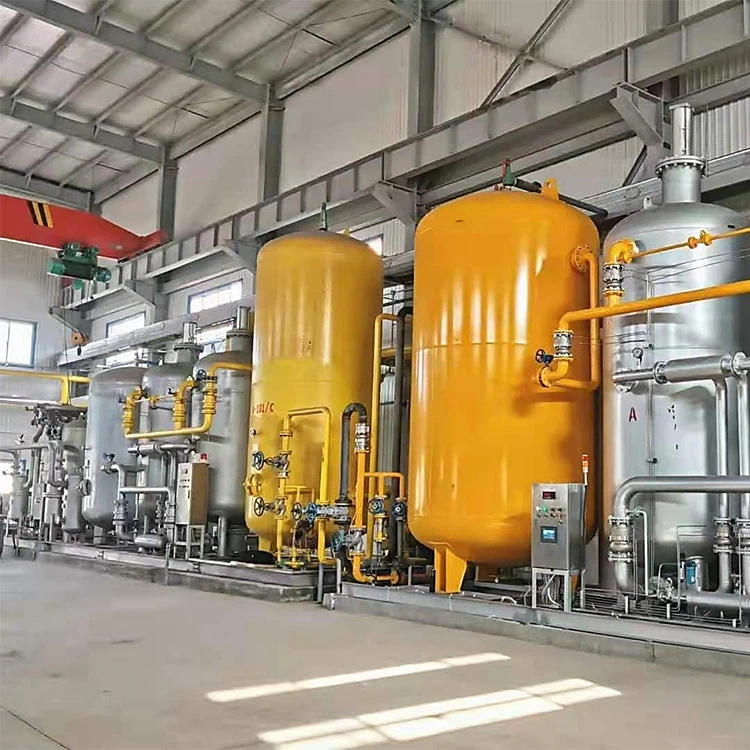

The control system precisely controls the pressurization and depressurization cycles of these towers. It switches the flow of compressed air between the two towers at the right time. When one tower is in the adsorption phase (adsorbing oxygen), the other is in the regeneration phase (releasing the adsorbed oxygen by reducing the pressure). This continuous cycle ensures a steady supply of high - purity nitrogen.
Another important function is monitoring and adjusting the nitrogen purity. The control system is equipped with sensors that measure the purity of the produced nitrogen. If the purity drops below the set level, the control system can make adjustments. It might increase the cycle time of the adsorption phase, allowing more oxygen to be removed from the air, or it could adjust the pressure settings to optimize the adsorption process.
Temperature also plays a crucial role in the PSA process. The control system monitors the temperature inside the adsorption towers. If the temperature rises too high, it can affect the performance of the adsorbent. The control system can then take actions such as adjusting the cooling system to maintain the optimal temperature for the adsorption process.
The control system also manages the flow rate of the incoming compressed air and the outgoing nitrogen. It ensures that the flow rate is consistent and meets the requirements of the end - user. For example, in a food packaging application, a specific flow rate of nitrogen is needed to displace the oxygen in the packaging and preserve the freshness of the food. The control system can adjust the flow rate based on the demand.
In addition to these operational functions, the control system provides diagnostic and safety features. It can detect any malfunctions in the generator, such as a leak in the system, a blockage in the pipes, or a failure of a valve. Once a problem is detected, the control system can send out an alarm, either locally or remotely, to alert the operators. It can also shut down the system in case of a serious fault to prevent further damage.
Some advanced control systems also offer remote monitoring and control capabilities. This means that operators can monitor the performance of the PSA Nitrogen Generator from anywhere using a computer or a mobile device. They can view real - time data such as nitrogen purity, flow rate, and temperature, and make adjustments to the system settings if needed.
Let's talk about how the control system compares to other similar systems in related equipment. For instance, in a VPSA Oxygen Generator, the basic principle of pressure swing adsorption is the same, but the control system has different requirements. In a VPSA Oxygen Generator, the goal is to produce high - purity oxygen, so the control system focuses on optimizing the adsorption and desorption of nitrogen and other impurities.
The control system in a PSA Nitrogen Generator is designed to be user - friendly. It usually has a graphical user interface (GUI) that allows operators to easily set the parameters, view the status of the generator, and access historical data. Even operators with limited technical knowledge can operate the generator with ease.
Now, if you're in the market for a PSA Nitrogen Generator, you'll want to pay close attention to the control system. A high - quality control system ensures reliable and efficient operation of the generator, which in turn saves you time and money in the long run.
We, as a PSA Nitrogen Generator supplier, offer a range of generators with state - of - the - art control systems. Our control systems are designed and engineered to meet the diverse needs of different industries. Whether you need a small - scale generator for a laboratory or a large - scale one for an industrial plant, we've got you covered.
If you're interested in learning more about our PSA Nitrogen Generators or have any questions about the control system or the whole PSA process, don't hesitate to get in touch with us. We're always happy to have a chat and discuss how our products can meet your specific requirements. Contact us today to start the procurement and negotiation process.
References
- Perry, R. H., & Green, D. W. (Eds.). (2008). Perry's Chemical Engineers' Handbook. McGraw - Hill.
- Yang, R. T. (1987). Gas Separation by Adsorption Processes. Butterworths.