

As a supplier of VPSA Oxygen Generators, I often get asked about the noise level of these machines during operation. This is a crucial consideration for many potential buyers, especially those who plan to install the generator in an environment where noise could be a concern, such as a hospital, laboratory, or industrial facility close to residential areas. In this blog post, I'll delve into the factors that influence the noise level of a VPSA Oxygen Generator, typical noise levels, and how we address noise - related issues in our products.

Understanding VPSA Oxygen Generators
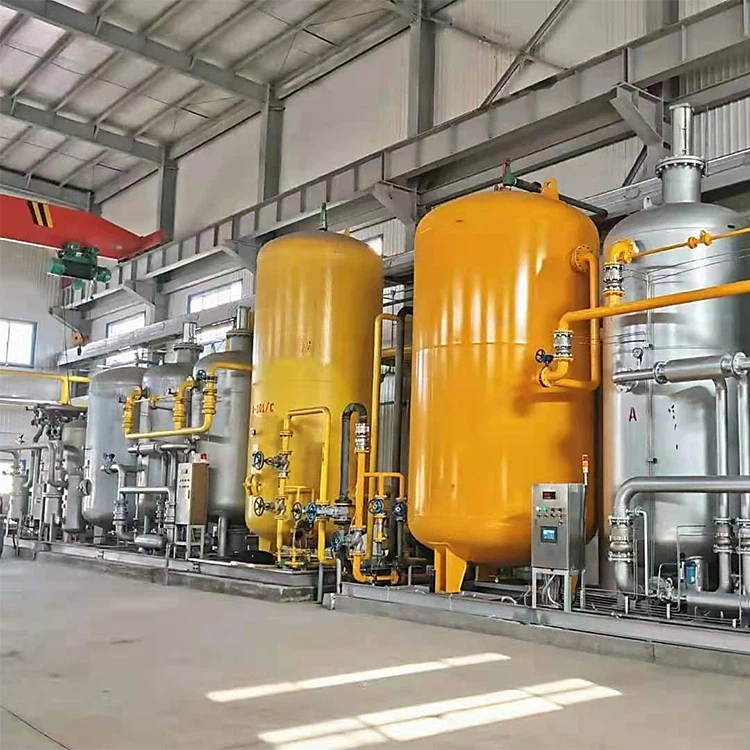
Before discussing the noise level, it's essential to understand what a VPSA Oxygen Generator is. A VPSA Oxygen Generator uses a Vacuum Pressure Swing Adsorption (VPSA) process to separate oxygen from the air. This technology relies on adsorbent materials that selectively adsorb nitrogen, allowing oxygen to pass through and be collected. The process involves several components, including blowers, compressors, valves, and adsorbent beds, all of which can contribute to the overall noise output.
Factors Affecting Noise Levels
- Blowers and Compressors
Blowers and compressors are the heart of a VPSA Oxygen Generator. They are responsible for creating the necessary pressure differentials to drive the adsorption and desorption processes. These mechanical devices generate noise as they operate. The size and power of the blowers and compressors play a significant role in determining the noise level. Larger, more powerful units generally produce more noise because they need to move more air and create higher pressures. - Valve Operations
The opening and closing of valves in the VPSA system also contribute to noise. Each time a valve switches, there is a sudden change in pressure, which can result in a sharp noise. The frequency of valve operations and the design of the valves themselves can impact the overall noise output. High - quality valves with smooth operation and proper damping mechanisms can help reduce this type of noise. - Adsorbent Bed Movement
Although the adsorbent beds in a VPSA Oxygen Generator are relatively stationary, there can be some minor vibrations and movements during the adsorption and desorption cycles. These movements can cause noise, especially if the beds are not properly secured or if there is excessive friction between the adsorbent material and the bed structure. - Enclosure and Installation
The way the VPSA Oxygen Generator is enclosed and installed can have a significant impact on the noise level. A well - designed enclosure can act as a sound barrier, reducing the amount of noise that escapes into the surrounding environment. Additionally, proper installation on a stable foundation can minimize vibrations that contribute to noise. If the generator is installed on an uneven surface or without proper vibration isolation, it can generate more noise.
Typical Noise Levels
The noise level of a VPSA Oxygen Generator can vary widely depending on the factors mentioned above. In general, smaller, lower - capacity VPSA Oxygen Generators may produce noise levels in the range of 60 - 70 decibels (dB(A)). This is comparable to the noise level of normal conversation. Larger, industrial - scale VPSA Oxygen Generators, on the other hand, can have noise levels ranging from 70 - 90 dB(A). At 90 dB(A), the noise is similar to that of a lawn mower or a noisy office environment.
It's important to note that these are just rough estimates, and the actual noise level of a specific VPSA Oxygen Generator can be influenced by many other factors, such as the specific design of the machine, the quality of its components, and the operating conditions.
How We Address Noise - Related Issues
As a supplier, we are aware of the importance of noise reduction in our VPSA Oxygen Generators. We take several steps to minimize the noise levels of our products:
- Component Selection
We carefully select high - quality blowers, compressors, and valves that are designed to operate quietly. We work with reputable manufacturers who have a track record of producing low - noise equipment. For example, we choose blowers with advanced aerodynamic designs that reduce turbulence and noise. - Enclosure Design
Our VPSA Oxygen Generators are equipped with well - engineered enclosures. These enclosures are made of sound - absorbing materials that help to dampen the noise generated by the internal components. The enclosures are also designed to be airtight, which not only reduces noise but also protects the internal components from dust and other contaminants. - Vibration Isolation
We use vibration isolation mounts and pads to minimize the transfer of vibrations from the generator to the surrounding structure. This helps to reduce the overall noise level and also extends the lifespan of the generator by reducing wear and tear caused by vibrations. - System Optimization
Our engineering team continuously optimizes the design of our VPSA Oxygen Generators to reduce noise. We use advanced simulation tools to analyze the airflow, pressure differentials, and mechanical movements within the system. By fine - tuning the design, we can minimize noise - generating factors without sacrificing the performance of the generator.
Comparing with PSA Nitrogen Generators
It's also interesting to compare the noise levels of VPSA Oxygen Generators with PSA Nitrogen Generators. PSA Nitrogen Generators operate on a similar principle of pressure swing adsorption but are designed to separate nitrogen from the air instead of oxygen. In general, the noise levels of PSA Nitrogen Generators are comparable to those of VPSA Oxygen Generators. However, the specific noise level can vary depending on the size, capacity, and design of the individual machines.
Importance of Noise Consideration in Different Applications
- Medical Applications
In a hospital or medical facility, noise can be a significant concern. Patients need a quiet environment to rest and recover. A noisy VPSA Oxygen Generator could disrupt the peace and comfort of the patients and even interfere with medical equipment and communication. Therefore, in medical applications, low noise levels are of utmost importance. - Industrial Applications
In industrial settings, while noise may not be as critical as in medical applications, it can still have an impact on the working environment. High noise levels can cause hearing damage to workers if they are exposed to it for extended periods. Additionally, excessive noise can be a nuisance and may even violate local noise regulations. Therefore, industrial users also prefer VPSA Oxygen Generators with lower noise levels. - Research and Laboratory Settings
In research and laboratory environments, a quiet atmosphere is often required for accurate measurements and experiments. A noisy VPSA Oxygen Generator could introduce unwanted background noise that could interfere with sensitive instruments and experiments.
Contact Us for a Noise - Free Solution
If you're in the market for a VPSA Oxygen Generator and are concerned about the noise level, we're here to help. Our team of experts can provide you with detailed information about the noise levels of our products and how we can customize a solution to meet your specific noise requirements. Whether you need a generator for a medical facility, an industrial plant, or a research laboratory, we have the expertise and the technology to deliver a high - performance, low - noise VPSA Oxygen Generator.
We understand that every customer's needs are unique, and we're committed to providing the best possible solutions. Contact us today to start a conversation about your VPSA Oxygen Generator requirements. We look forward to working with you to find the perfect fit for your application.
References
- Chemical Engineering Handbook, various editions, which provide in - depth knowledge on the principles of pressure swing adsorption and related equipment operation.
- Industry reports on the performance and noise characteristics of VPSA Oxygen Generators and PSA Nitrogen Generators from leading manufacturers.