

As a supplier of VPSA Oxygen Generators, I've witnessed firsthand the crucial role that flow meters play in these systems. In this blog post, I'll delve into the significance of flow meters in a VPSA Oxygen Generator system, exploring their functions, types, and the impact they have on the overall performance of the generator.
The Basics of a VPSA Oxygen Generator System
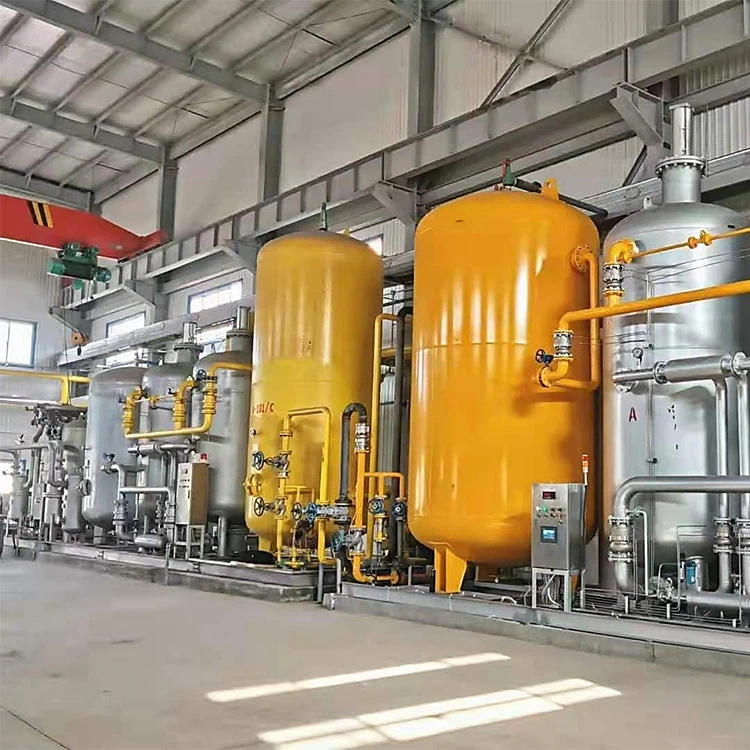
Before we dive into the role of flow meters, let's briefly review how a VPSA (Vacuum Pressure Swing Adsorption) Oxygen Generator system works. VPSA technology is a reliable and cost - effective method for producing high - purity oxygen. The system operates based on the principle of adsorption, where a molecular sieve adsorbs nitrogen from the incoming air, allowing oxygen to pass through and be collected.
The process typically involves two adsorption towers filled with a molecular sieve. While one tower is in the adsorption phase, removing nitrogen from the air and producing oxygen, the other tower is in the regeneration phase, where the adsorbed nitrogen is desorbed under reduced pressure. This continuous cycle ensures a steady supply of oxygen.
The Role of Flow Meters in a VPSA Oxygen Generator System
1. Monitoring and Control of Gas Flow
One of the primary functions of a flow meter in a VPSA Oxygen Generator system is to monitor and control the flow of gases. Incoming air needs to be regulated to ensure that the system operates at an optimal flow rate. If the air flow is too high, the molecular sieve may not have enough time to adsorb nitrogen effectively, resulting in lower oxygen purity. On the other hand, if the air flow is too low, the production rate of oxygen will be reduced.
Flow meters provide real - time data on the flow rate of incoming air, allowing operators to adjust the intake valves accordingly. This precise control helps maintain a consistent and efficient operation of the VPSA Oxygen Generator.
For example, in a large - scale industrial application where a high volume of oxygen is required, accurate flow measurement and control are essential to meet the production demands. A flow meter can detect any fluctuations in the air flow and trigger automatic adjustments to keep the system running smoothly.
2. Oxygen Output Measurement
Flow meters are also used to measure the output of oxygen from the VPSA Oxygen Generator. This measurement is crucial for several reasons. Firstly, it allows operators to determine the actual production rate of oxygen, which is important for meeting customer requirements. Secondly, it helps in assessing the efficiency of the system. If the oxygen output is lower than expected, it could indicate a problem with the adsorption process, such as a saturated molecular sieve or a leak in the system.
By continuously monitoring the oxygen flow rate, operators can quickly identify any issues and take corrective actions. This proactive approach helps minimize downtime and ensures that the VPSA Oxygen Generator is operating at its peak performance.
3. Process Optimization
Flow meters play a vital role in optimizing the overall process of the VPSA Oxygen Generator system. By providing accurate flow data, they enable operators to fine - tune the system parameters for maximum efficiency. For instance, based on the flow meter readings, operators can adjust the pressure and cycle time of the adsorption and regeneration phases.
In addition, flow meters can be integrated with other control systems in the VPSA Oxygen Generator. This integration allows for a more automated and intelligent operation of the system. For example, the flow meter data can be used to control the speed of the vacuum pumps, which are responsible for the regeneration of the molecular sieve. By adjusting the pump speed according to the flow rate, energy consumption can be reduced, and the lifespan of the equipment can be extended.
Types of Flow Meters Used in VPSA Oxygen Generator Systems
1. Differential Pressure Flow Meters
Differential pressure flow meters are one of the most commonly used types in VPSA Oxygen Generator systems. They work based on the principle that the pressure drop across a constriction in a pipe is proportional to the flow rate of the fluid. A well - known example of a differential pressure flow meter is the orifice plate flow meter.
The orifice plate is placed in the pipe, and as the gas flows through the constriction, a pressure difference is created. This pressure difference is measured by pressure sensors, and the flow rate is calculated using a pre - determined formula. Differential pressure flow meters are relatively simple and cost - effective, making them a popular choice for many VPSA Oxygen Generator applications.

2. Thermal Mass Flow Meters
Thermal mass flow meters are another type that is widely used in VPSA Oxygen Generator systems. These meters measure the mass flow rate of a gas by detecting the heat transfer from a heated element to the flowing gas. The rate of heat transfer is directly related to the mass flow rate of the gas.
Thermal mass flow meters offer several advantages, such as high accuracy, fast response time, and the ability to measure low flow rates. They are also not affected by changes in pressure and temperature, which makes them suitable for use in VPSA Oxygen Generator systems where the operating conditions can vary.
3. Ultrasonic Flow Meters
Ultrasonic flow meters use ultrasonic waves to measure the flow rate of a gas. They work by sending ultrasonic signals through the gas in the pipe and measuring the time it takes for the signals to travel upstream and downstream. The difference in the travel time is related to the flow rate of the gas.
Ultrasonic flow meters are non - intrusive, which means they do not require any physical contact with the gas. This makes them ideal for applications where the gas is corrosive or contains particles that could damage other types of flow meters. They also have a wide range of measurement capabilities and can be used in both large and small - diameter pipes.
Impact on the Overall Performance of the VPSA Oxygen Generator
The proper functioning of flow meters has a significant impact on the overall performance of the VPSA Oxygen Generator. Accurate flow measurement and control ensure that the system operates at an optimal level, resulting in high - purity oxygen production, increased efficiency, and reduced operating costs.
When flow meters are working correctly, the VPSA Oxygen Generator can produce oxygen with a high degree of consistency. This is crucial for applications where a stable supply of high - purity oxygen is required, such as in the medical industry or in metal cutting processes.
In addition, by optimizing the process based on flow meter data, the energy consumption of the VPSA Oxygen Generator can be reduced. This not only saves costs but also makes the system more environmentally friendly.
Conclusion
In conclusion, flow meters are an indispensable component of a VPSA Oxygen Generator system. They play a crucial role in monitoring and controlling gas flow, measuring oxygen output, and optimizing the overall process. By choosing the right type of flow meter and ensuring its proper operation, operators can maximize the performance of the VPSA Oxygen Generator, resulting in high - quality oxygen production and cost - effective operation.
If you are interested in VPSA Oxygen Generator or PSA Nitrogen Generator systems and want to learn more about how flow meters can enhance their performance, or if you are considering purchasing a VPSA Oxygen Generator for your specific application, please feel free to contact us. We are always ready to assist you in finding the best solution for your needs.
References
- Perry, R. H., & Green, D. W. (1997). Perry's Chemical Engineers' Handbook. McGraw - Hill.
- Welty, J. R., Wicks, C. E., & Wilson, R. E. (2008). Fundamentals of Momentum, Heat, and Mass Transfer. Wiley.