

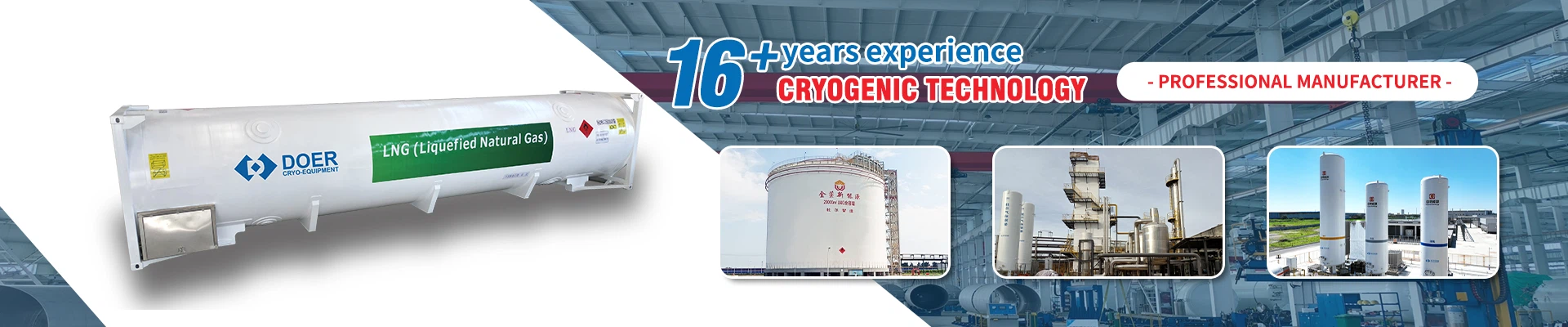
Precautions for the use of cryogenic storage tanks mainly include the following aspects:
Safe operation: The operation of cryogenic storage tanks must be carried out in accordance with relevant safety regulations, and operators must undergo professional training and qualification assessment. During the operation, protective equipment must be worn, including cold-proof clothing, gloves, goggles, etc. Anti-static clothing, anti-static shoes, safety helmets and other labor protection supplies should be worn during operation. Before entering the station, touch the static touch release facilities with both hands to release static electricity.
Tank protection: The outer surface of the cryogenic storage tank is usually frosted, and protective measures are required to prevent the surface of the tank from being rubbed or hit to avoid damage. At the same time, pay attention to keeping the outside of the tank clean and avoid accumulation of debris.
Regular inspection: Regularly check whether the insulation layer of the storage tank is intact to prevent the insulation layer from being damp or damaged. Check whether the liquid level sensor and temperature sensor of the storage tank are working properly to ensure that the liquid level and temperature inside the cryogenic storage tank are controlled within a safe range. Regularly check the vacuum degree in the jacket of the cryogenic storage tank. If the vacuum degree deteriorates, take measures to replenish the vacuum.
Ventilation requirements: Low-temperature storage tanks need to maintain proper ventilation to avoid excessive or low pressure inside the tank. When filling or emptying liquids, it is necessary to ensure that the ventilation system works properly and promptly remove the gas generated inside the tank.
Emergency treatment: In the event of an accident, emergency treatment measures must be taken immediately to cut off the liquid supply pipeline, close the air inlet, remove the pressure inside the tank, ensure the safety of personnel, and notify the relevant departments for processing.
Fire safety: Most of the substances stored in low-temperature storage tanks are flammable and explosive substances, and fire safety measures must be strengthened. There must be no open flames around the storage tanks, and smoking is strictly prohibited. When repairing or inspecting the storage tank, obvious warning signs must be hung to remind others to pay attention to fire prevention.
Liquid nitrogen treatment: In the process of using liquid nitrogen, it should be noted that the evaporation of liquid nitrogen will produce a large amount of nitrogen gas, which may lead to insufficient oxygen content in the air and cause suffocation. Therefore, be extra careful when using liquid nitrogen in a confined space.
Environmental requirements: Cryogenic storage tanks should be installed on a flat, solid, fireproof, and lightning-proof foundation, and keep a certain distance from other equipment to avoid collision and vibration. The container should be placed in a cool, dry place, and the room should be well ventilated.
Operation procedures: Cryogenic storage tanks should be filled and discharged in accordance with the prescribed operating procedures to avoid filling and discharging too quickly or too full to prevent pressure fluctuations or freezing damage.
Strictly following these precautions can ensure the safe operation of cryogenic storage tanks and prevent accidents.