

Hey there! As a supplier of PSA Nitrogen Generators, I often get asked about how to choose the right buffer tank for these machines. It's a crucial decision that can significantly impact the performance and efficiency of your nitrogen generation system. In this blog, I'll share some insights to help you make an informed choice.
Why a Buffer Tank?
First off, let's understand why a buffer tank is necessary for a PSA Nitrogen Generator. The PSA (Pressure Swing Adsorption) process works by separating nitrogen from other gases in the air. However, the output of nitrogen from the generator can be a bit uneven. There are fluctuations in pressure and flow rate, especially during the adsorption and desorption cycles of the PSA system.
A buffer tank acts as a storage unit. It smooths out these fluctuations, providing a more consistent supply of nitrogen to your end - use applications. Whether you're using nitrogen for food packaging, electronics manufacturing, or any other industrial process, a stable nitrogen supply is essential for optimal results.
Key Factors to Consider
1. Capacity
The capacity of the buffer tank is one of the most important factors. You need to consider the flow rate of your PSA Nitrogen Generator and the demand of your application. If your application has a high and continuous demand for nitrogen, you'll need a larger buffer tank.
For example, if your PSA nitrogen generator has a flow rate of 10 cubic meters per hour and your application requires a relatively steady supply throughout the day, a buffer tank with a capacity of at least 5 - 10 cubic meters might be appropriate. On the other hand, if your demand is intermittent or low, a smaller tank could suffice.
To calculate the approximate capacity, you can use the following simple rule of thumb: Multiply the peak demand of your application (in cubic meters per minute) by the time (in minutes) you want the buffer tank to supply nitrogen during a potential interruption or fluctuation in the generator's output.
2. Pressure Rating
The pressure rating of the buffer tank must match the operating pressure of your PSA nitrogen generator. Most PSA nitrogen generators operate at pressures ranging from 3 - 10 bar. The buffer tank should be able to handle the maximum pressure that the generator can produce.

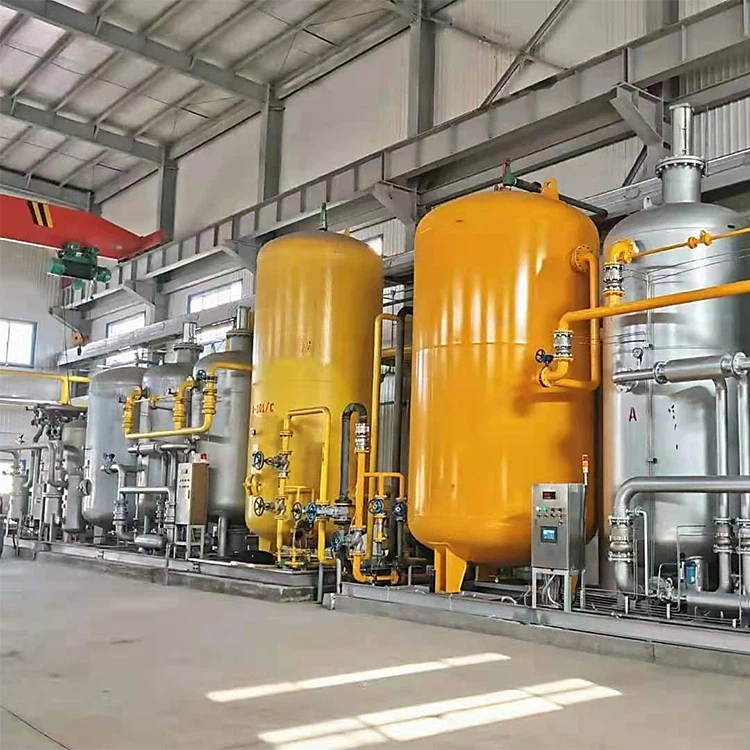
If the pressure rating of the tank is too low, it can be a safety hazard as it may rupture under high pressure. Conversely, if the pressure rating is much higher than necessary, you'll end up paying more for a tank with capabilities you don't need. Always check the specifications of your PSA nitrogen generator and choose a buffer tank with a compatible pressure rating.
3. Material
The material of the buffer tank is also crucial. Common materials include carbon steel, stainless steel, and aluminum.
- Carbon Steel: It's a cost - effective option and is suitable for most industrial applications. However, carbon steel is prone to corrosion, especially in humid or corrosive environments. If you're using the buffer tank in such conditions, you'll need to apply appropriate coatings or linings to protect it.
- Stainless Steel: This material is highly resistant to corrosion, making it ideal for applications where the nitrogen may come into contact with moisture or corrosive substances. Stainless steel tanks are more expensive than carbon steel ones but offer better long - term durability.
- Aluminum: Aluminum tanks are lightweight and have good corrosion resistance. They are often used in applications where weight is a concern, such as mobile nitrogen generation systems.
4. Size and Space Requirements
You need to consider the physical size of the buffer tank and whether you have enough space to install it. The tank should be easily accessible for maintenance and inspection. Measure the available space in your facility and choose a tank that fits comfortably without causing any obstruction.
Some buffer tanks come in vertical designs, which are suitable for areas with limited floor space. Horizontal tanks, on the other hand, may be a better option if you have more floor space but limited height.
5. Quality and Certification
Always choose a buffer tank from a reputable manufacturer. Look for tanks that meet relevant industry standards and certifications, such as ASME (American Society of Mechanical Engineers) or CE (Conformité Européene). These certifications ensure that the tank has been designed and manufactured to high - quality and safety standards.
Other Considerations
1. Integration with the PSA Nitrogen Generator
The buffer tank should be easily integrated with your PSA nitrogen generator. It should have the right connections and fittings to ensure a seamless flow of nitrogen from the generator to the tank and then to your application. Some manufacturers offer pre - assembled systems that include both the PSA nitrogen generator and the buffer tank, which can simplify the installation process.
2. Maintenance Requirements
Consider the maintenance requirements of the buffer tank. Tanks made of certain materials may require more frequent inspections and maintenance. For example, carbon steel tanks may need regular checks for corrosion, while stainless steel tanks generally require less maintenance.
Look for tanks that are designed for easy cleaning and inspection. Some tanks come with access ports and manholes, which make it easier to perform internal inspections and maintenance tasks.
3. Cost
Cost is always a factor in any purchasing decision. While you don't want to compromise on quality, you also want to get the best value for your money. Compare the prices of different buffer tanks based on their capacity, material, pressure rating, and other features. Remember that the initial cost is not the only consideration; also factor in the long - term maintenance and operating costs.
Conclusion
Choosing the right buffer tank for your PSA nitrogen generator is a multi - faceted decision. You need to consider factors such as capacity, pressure rating, material, size, quality, and cost. By carefully evaluating these factors and understanding your specific application requirements, you can select a buffer tank that will ensure a reliable and efficient supply of nitrogen for your industrial processes.
If you're still unsure about which buffer tank is right for your PSA Nitrogen Generator, don't hesitate to reach out. We're here to help you make the best choice and ensure that your nitrogen generation system operates at its best. Whether you're a small - scale business or a large industrial facility, we have the expertise and products to meet your needs. Let's have a chat and discuss your requirements in detail.
References
- ASME Boiler and Pressure Vessel Code
- Industrial Gas Handbook: Gas Separation and Purification by Carl M. von Linde
- Pressure Swing Adsorption by Douglas M. Ruthven, Sirirurg Sirkar, and K. K. Rao