

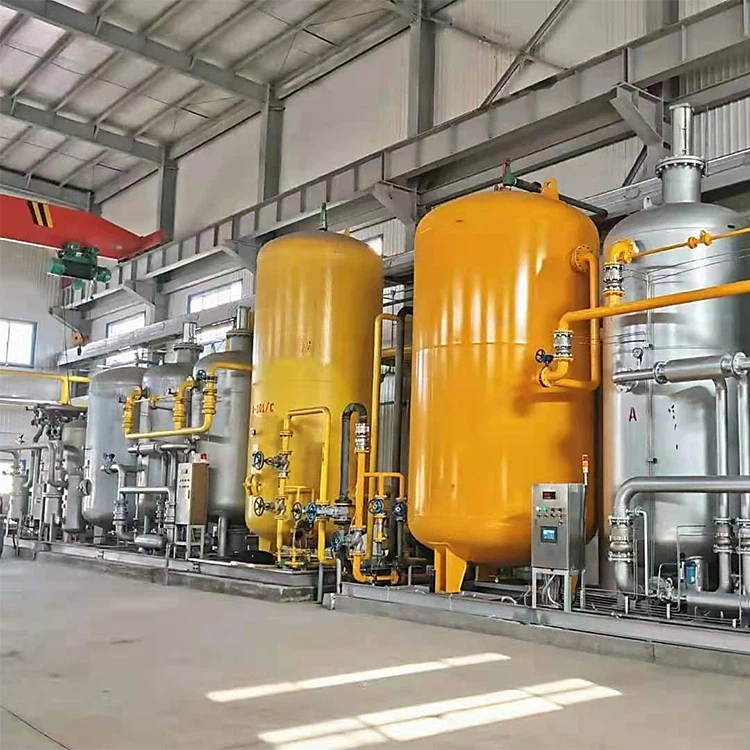
The vacuum pressure swing adsorption (VPSA) oxygen generator is a crucial piece of equipment widely used in various industries, such as metallurgy, chemical engineering, and wastewater treatment, to produce high - purity oxygen. As a VPSA oxygen generator supplier, I understand the significance of every component in the system, especially the adsorbents. Using low - quality adsorbents in a VPSA oxygen generator can have far - reaching impacts on the performance, efficiency, and overall cost - effectiveness of the equipment.
1. Impact on Oxygen Purity
The primary function of a VPSA oxygen generator is to separate oxygen from the air, and the adsorbents play a central role in this process. High - quality adsorbents have a well - defined pore structure and high selectivity for nitrogen and other impurities. They can effectively adsorb nitrogen while allowing oxygen to pass through, thus producing oxygen with high purity.
However, low - quality adsorbents often have irregular pore sizes and poor selectivity. This means that they may not be able to adsorb nitrogen as efficiently as high - quality ones. As a result, more nitrogen and other impurities will remain in the produced oxygen, leading to a significant decrease in oxygen purity. For industries that require high - purity oxygen, such as the semiconductor manufacturing industry, even a slight reduction in oxygen purity can have a detrimental effect on the product quality and production process. For example, in semiconductor fabrication, impure oxygen can cause oxidation defects on the silicon wafers, leading to lower yields and increased production costs.
2. Reduced Adsorption Capacity
Adsorption capacity is another critical parameter of adsorbents in a VPSA oxygen generator. High - quality adsorbents have a large surface area and a high density of active adsorption sites, which allows them to adsorb a large amount of nitrogen and other impurities per unit mass. This enables the VPSA oxygen generator to operate continuously for a longer period without the need for frequent regeneration of the adsorbents.
On the contrary, low - quality adsorbents have a limited adsorption capacity. They become saturated with nitrogen and other impurities more quickly, which means that the regeneration cycle of the adsorbents has to be shortened. Frequent regeneration not only increases the energy consumption of the VPSA oxygen generator but also reduces the overall production efficiency. For instance, if a VPSA oxygen generator with high - quality adsorbents can operate for 8 hours between regenerations, a system using low - quality adsorbents may only be able to operate for 2 - 3 hours, resulting in a significant reduction in oxygen production volume.
3. Increased Energy Consumption
The operation of a VPSA oxygen generator involves a series of pressure changes for adsorption and desorption processes. High - quality adsorbents require less energy to achieve efficient adsorption and desorption due to their excellent adsorption properties. They can adsorb and release nitrogen and other impurities under relatively mild pressure and temperature conditions.
In contrast, low - quality adsorbents often require more energy to perform the same adsorption and desorption tasks. This is because they have a lower affinity for nitrogen and other impurities, so higher pressures are needed during the adsorption process to ensure sufficient adsorption. Similarly, during the desorption process, more energy is required to remove the adsorbed impurities from the low - quality adsorbents. The increased energy consumption not only leads to higher operating costs but also has a negative impact on the environmental footprint of the VPSA oxygen generator. For example, a VPSA oxygen generator using high - quality adsorbents may consume 0.3 - 0.4 kWh per cubic meter of oxygen produced, while a system with low - quality adsorbents may consume up to 0.6 - 0.8 kWh per cubic meter, significantly increasing the electricity bill for the end - user.
4. Shorter Service Life of the Adsorbents
High - quality adsorbents are designed to withstand multiple adsorption - desorption cycles without significant degradation of their performance. They have a stable chemical structure and good mechanical strength, which allows them to maintain their adsorption properties over a long period.
Low - quality adsorbents, on the other hand, are more prone to damage and degradation. They may break down or lose their adsorption capacity after a relatively small number of adsorption - desorption cycles. This is due to factors such as poor manufacturing quality, low - grade raw materials, and lack of proper treatment during the production process. The shorter service life of low - quality adsorbents means that they need to be replaced more frequently, which increases the maintenance cost and downtime of the VPSA oxygen generator. For example, high - quality adsorbents may have a service life of 5 - 10 years, while low - quality adsorbents may need to be replaced every 1 - 2 years.

5. Impact on the Overall System Reliability
The reliability of a VPSA oxygen generator is crucial for continuous industrial production. High - quality adsorbents contribute to the stable operation of the system by providing consistent adsorption performance and long - term durability.
When low - quality adsorbents are used, the overall system reliability is significantly reduced. The frequent saturation of the adsorbents, the need for more frequent regeneration, and the shorter service life of the adsorbents can all lead to unexpected breakdowns and interruptions in the oxygen production process. This can be particularly problematic for industries that rely on a continuous supply of oxygen, such as the steelmaking industry. In a steel mill, an interruption in the oxygen supply can cause delays in the steel - making process, leading to production losses and potential damage to the equipment.
Comparison with PSA Nitrogen Generator
It is also worth comparing the situation in a VPSA oxygen generator with that in a PSA Nitrogen Generator. Similar to a VPSA oxygen generator, a PSA nitrogen generator uses adsorbents to separate nitrogen from the air. High - quality adsorbents in a PSA nitrogen generator are essential for producing high - purity nitrogen with high efficiency and reliability. Just as low - quality adsorbents in a VPSA oxygen generator can cause problems, using low - quality adsorbents in a PSA nitrogen generator can also lead to reduced nitrogen purity, lower adsorption capacity, increased energy consumption, and shorter adsorbent service life.
Conclusion
In conclusion, using low - quality adsorbents in a VPSA Oxygen Generator can have a wide range of negative impacts on the performance, efficiency, and reliability of the equipment. These impacts include reduced oxygen purity, lower adsorption capacity, increased energy consumption, shorter adsorbent service life, and decreased overall system reliability. As a VPSA oxygen generator supplier, I strongly recommend using high - quality adsorbents to ensure the optimal operation of the equipment and to meet the high - quality oxygen requirements of various industries.
If you are in the market for a VPSA oxygen generator or need to replace the adsorbents in your existing system, we are here to provide you with high - quality products and professional technical support. Contact us for more information and to start a procurement negotiation.
References
- Ruthven, D. M., Farooq, S., & Knaebel, K. S. (1994). Pressure Swing Adsorption. John Wiley & Sons.
- Yang, R. T. (1987). Gas Separation by Adsorption Processes. Butterworths.
- Sircar, S., & Golden, T. C. (2005). Pressure swing adsorption processes. In Handbook of Separation Process Technology (pp. 1183 - 1218). John Wiley & Sons.