

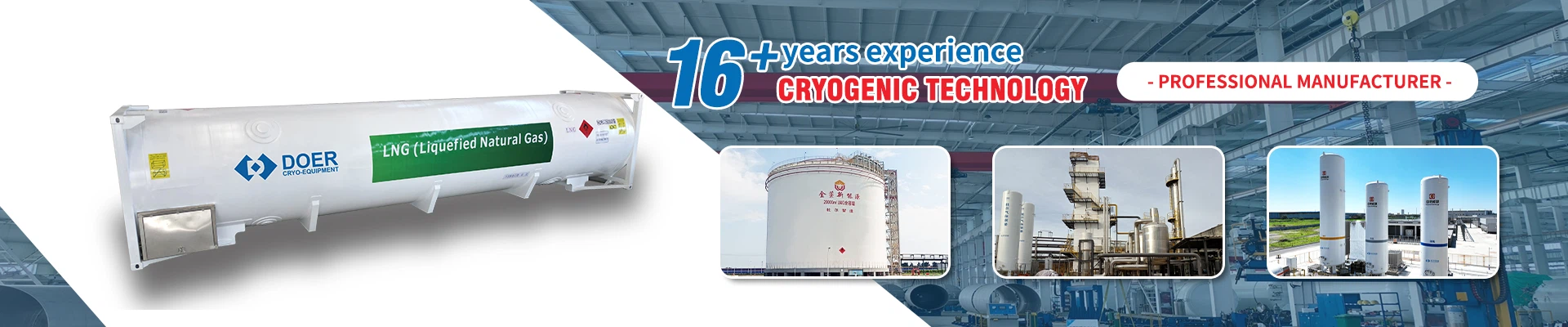
As the global energy transition accelerates, the demand for cross-border long-distance storage and transportation of cryogenic media such as LNG, liquid hydrogen, and liquid helium continues to surge. Relying on standardized specifications and ultimate cryogenic insulation performance, the 40ft T75 cryogenic tank container has become the core mainstream equipment for cryogenic multimodal transport.
Standardized Structure: Double-layer Vacuum Architecture, Building a Solid Foundation for Storage and Transportation
Strictly following the ISO 1496-3 international standard, its 1AA standard dimensions seamlessly adapt to road, rail, and sea multimodal transport, significantly reducing cross-border transshipment costs. The core features a double-layer vacuum insulation structure, combining safety with adaptability:
Inner Vessel: Made of S30408 or 304 austenitic stainless steel, capable of withstanding ultra-low temperatures of -196℃ and below, eliminating the risk of low-temperature brittle fracture. Combined with strain hardening technology, it optimizes wall thickness and increases loading capacity while meeting safety standards.
Outer Shell: Made of Q345R high-strength steel to withstand transportation collisions and compression, providing reliable physical protection for the internal precision structure.
Vacuum Insulation System: The interlayer between the inner and outer tanks is filled with composite insulation materials and high-performance adsorbents, with a vacuum level of ≤8×10⁻²Pa. High-end products achieve a daily static evaporation rate as low as 0.24%, allowing LNG to be stably stored for 120 days, fully meeting the demands of long-distance ocean transportation.

Parameters & Compliance: Full Temperature Range Adaptation and Standardized Safety Compliance
Mainstream 40ft cryogenic tank containers have a geometric volume exceeding 46m³, an effective volume of over 41.4m³, and a rated gross mass of 30,480kg. The temperature range covers liquid helium at -269℃ to LNG at -162℃, adapting to the storage and transport of all categories of cryogenic media.
Comprehensive compliance system: Export equipment complies with the ASME VIII-1 pressure vessel code, while domestic operations meet the NB/T 47059 industry standard. Designed for all working conditions, it ensures reliable sealing and sensitive operation of valves and emergency shut-off devices in low-temperature environments.
Manufacturing Barriers: High-precision Craftsmanship Determines Long-term Equipment Performance
The core performance of cryogenic tank containers highly depends on precision manufacturing and vacuum pressure retention processes, which directly determine the operational stability and costs over a 5-8 year period.
As an industry leader, DOER Cryo-equipment relies on a billion-yuan-level production base and a 500-million-yuan 5G smart factory, equipped with robotic deep penetration welding and precision laser cutting equipment, achieving manufacturing precision of ±0.1mm. With multiple core patents in vacuum insulation and safety structures, the company applies its mature quality control system for cryogenic equipment to tank container manufacturing, ensuring low loss and long-term stable operation.
Operational Value & Industry Trends: Empowering the Upgrade of High-end Energy Logistics
The extremely low medium evaporation rate is the core advantage of T75 tank containers. It can significantly reduce medium loss during port storage and turnover, lower the investment in supporting equipment, and deliver remarkable economic benefits.
The industry currently presents three major upgrade trends: Lightweight and Large Volume (reducing weight and increasing capacity within compliance limits to lower unit logistics costs); Standardization of Ultra-low Temperature Transport (specialized tank containers for liquid hydrogen and helium to support cross-border hydrogen trade); and Intelligent Digitalization (relying on IoT and digital twin technologies to achieve intelligent lifecycle management of equipment).
Under the trend of global energy logistics integration, domestic enterprises represented by DOER Cryo-equipment continue to innovate technologically. They are driving the upgrade of cryogenic storage and transport equipment from traditional manufacturing to high-end intelligent manufacturing, continuously enhancing the core competitiveness of Chinese equipment in the global cryogenic logistics sector.